Top 10 Black Plastic Pipe Manufacturers in China

Choosing a supplier from the Top 10 Black Plastic Pipe Manufacturers in China calls for more than comparing prices. Black plastic pipe can serve water distribution, drainage, irrigation, and industrial systems, but products differ in resin, dimensions, pressure class, and intended use. A pipe suitable for buried irrigation may not fit a pressurized water network. Details matter.

This guide introduces manufacturers and the factors buyers can check before requesting a quotation. Look for clear product specifications, consistent wall thickness, traceable material information, and documented quality-control procedures. Ask about available diameters, delivery lead times, packaging, and support for installation or joining methods. Where relevant, verify test reports and certifications directly with the supplier; a logo on a brochure is not enough. Buyers should also confirm that the product meets the requirements of their project and destination market.

A ranking can help narrow a search, but it cannot replace due diligence. Capabilities, product lines, and service quality may change, and a factory’s strongest offering may not match every application. That takes checking. Request samples when practical, compare technical data on the same basis, and clarify warranty terms in writing. The right manufacturer is not necessarily the largest or cheapest. It is the one that can demonstrate a suitable product, communicate clearly, and deliver reliably for the project at hand. Some details may remain uncertain until a buyer reviews current documents and speaks directly with the company.
Top 10 Black Plastic Pipe Manufacturers in China

What Black Plastic Pipes Are and How They Are Used

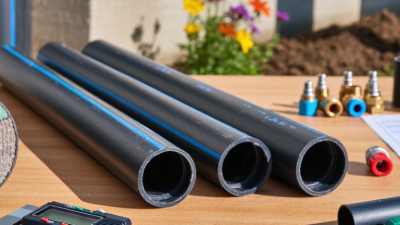
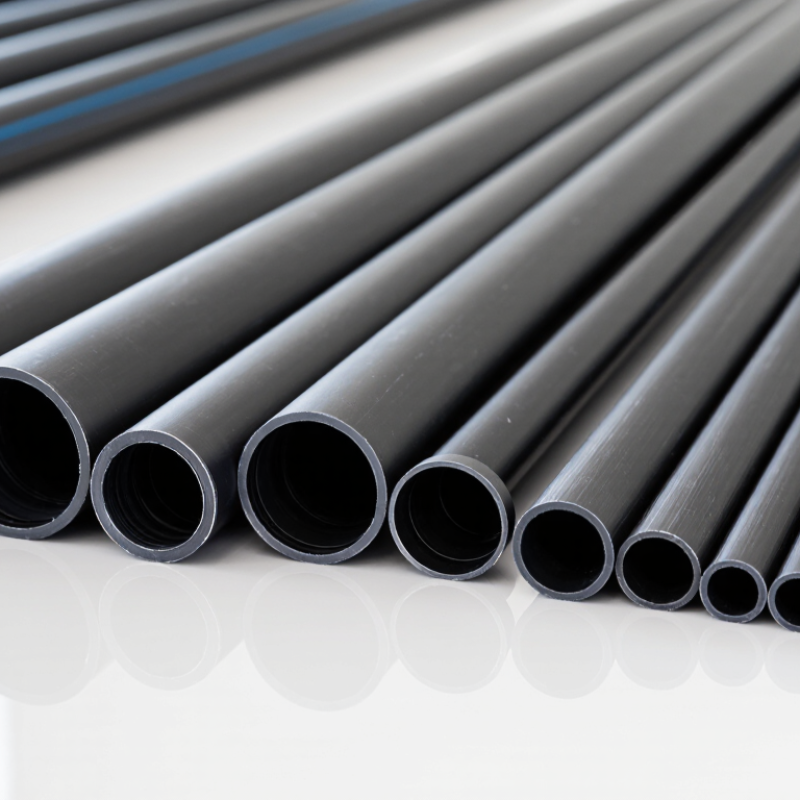
Black plastic pipe is commonly made from polyethylene, though color alone cannot confirm its material or performance. In many polyethylene pipes, carbon black helps protect the wall from sunlight exposure. The pipe feels smooth and slightly flexible, rather than brittle. That matters outdoors.

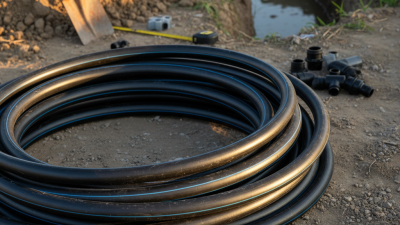
These pipes carry water for municipal distribution, farms, gardens, and some drainage systems. Irrigation lines may run beneath rows of crops, where flexibility helps them follow gentle ground changes. Larger pipes can also move wastewater or industrial fluids when the material and rating suit the service. A pipe’s pressure class, diameter, and wall thickness should match the system design.

Joining methods vary. Heat fusion creates a continuous joint, while mechanical fittings can be useful for repairs or connections. Installation still needs care. Sharp stones can damage a pipe, and poor support may cause sagging or stress at fittings. Not every black pipe is suitable for buried use or drinking water. Check its markings and technical documents before installation. This step is easy to overlook, and color can create false confidence. A field inspection may also reveal problems that a product sheet cannot.

China’s Black Plastic Pipe Manufacturing Industry

China’s black plastic pipe sector sits within a much larger plastics manufacturing base. China Plastics Processing Industry Association data put national plastic-pipe output at about 16.7 million metric tons in 2022. This figure covers pipe products broadly, not black pipe alone. That distinction matters: public datasets rarely separate output by pipe color, resin, or application.

Manufacturers commonly process polyethylene and other thermoplastics into pipes for water, drainage, and infrastructure projects. Black carbon pigment can help limit ultraviolet exposure, but buyers still need to check material specifications, pressure ratings, wall thickness, and batch test records. Small details count. A clean pipe surface does not prove consistent performance inside the wall.

The National Bureau of Statistics reported 74.885 million metric tons of plastic-product output across all categories in 2023. That scale supports a dense supplier and processing network, though the number is not a measure of pipe capacity. Industry totals can also hide differences in product quality and factory capability. The data is useful, but imperfect. For a credible comparison of Chinese manufacturers, verify current test reports and production records directly, rather than treating national output as proof of any single supplier’s reliability.

Top 10 Black Plastic Pipe Manufacturers in China - China’s Black Plastic Pipe Manufacturing Industry

Industry benchmarks for comparing manufacturers. This table contains no company or brand names and is not a verified ranking of individual manufacturers.

No. Comparison dimension Relevant factual benchmark Why it matters to buyers
1 Water-supply pipe compliance GB/T 13663.2-2018 specifies requirements for polyethylene (PE) pipes used in water-supply piping systems. Check that the offered pipe type and intended application match the applicable standard.
2 Water-supply fittings GB/T 13663.3-2018 covers PE fittings for water-supply piping systems. Pipe-and-fitting compatibility is important for a complete, reliable system.
3 Gas-pipe compliance GB/T 15558.1-2015 specifies requirements for PE pipes used in gaseous-fuel supply systems. Gas applications have distinct requirements; water-pipe conformity alone does not establish suitability.
4 Gas-pipe fittings GB/T 15558.2-2015 addresses PE fittings for gaseous-fuel supply systems. Confirm fitting standards and joining compatibility for the specified gas network.
5 Material strength classification ISO 12162 classifies thermoplastics for pressure piping by minimum required strength (MRS); PE 80 and PE 100 correspond to MRS values of 8 MPa and 10 MPa, respectively. The material class is one input to pressure-pipe design and should be verified from product documentation.
6 SDR and wall thickness SDR is the ratio of a pipe’s nominal outside diameter to its nominal wall thickness; a lower SDR denotes a thicker wall relative to diameter. Compare the specified SDR, diameter, material class, and design pressure together—not in isolation.
7 Long-term hydrostatic strength ISO 9080 describes extrapolation methods for estimating the long-term hydrostatic strength of thermoplastic piping materials. Long-term material performance is relevant to the design life of pressure-pipe systems.
8 Hydrostatic pressure testing ISO 1167 specifies a method for determining the resistance of thermoplastic pipes and fittings to internal pressure. Request test documentation that identifies the test conditions and the product batch.
9 Melt mass-flow rate ISO 1133-1 provides methods for measuring the melt mass-flow rate and melt volume-flow rate of thermoplastics. This test can help with resin and production-process quality checks; it is not a substitute for finished-pipe performance testing.
10 Black-pigment dispersion ISO 18553 specifies a method for assessing the degree of pigment or carbon-black dispersion in polyolefin pipes, fittings, and compounds. Ask for applicable quality-control results when black PE pipe is specified for the project.

Note: Standards and requirements depend on the pipe’s intended use, market, and project specification. Confirm the current applicable editions and required certifications before procurement.

Criteria for Selecting Leading Manufacturers

Selecting a black plastic pipe manufacturer in China requires evidence beyond a low quotation. The China Plastics Processing Industry Association’s 2023 industry review, drawing on National Bureau of Statistics data, reported about 74.9 million tonnes of plastic-product output. This covers many product types, not pipes alone, so request pipe-specific capacity and shipment records. Scale is not proof.

Check resin traceability, carbon-black dispersion, wall-thickness control, and pressure-test records. Ask for recent third-party test reports linked to the same pipe grade and production site. For polyethylene pressure systems, compare the stated product scope with ISO 4427. A certificate for another material or facility tells little. Request batch codes, raw-material certificates, and retained-sample procedures. Look closely.

Factory audits should include extrusion lines, calibration tanks, measuring instruments, and storage conditions—not just meeting rooms. Ask how the supplier controls ovality and rejected lots, then review corrective-action records. The OECD’s Global Plastics Outlook (2022) examines plastics’ lifecycle pressures; sourcing reviews can therefore request documented energy data and end-of-life guidance. One awkward point: polished test sheets may miss routine process drift. Compare dated batch records before ranking manufacturers.

Top 10 Black Plastic Pipe Manufacturers in China: Criteria for Selecting Leading Manufacturers

A practical technical screening benchmark: nominal pressure ratings for PE100 pipe at 20°C, using a design coefficient of 1.25. Confirm product-specific ratings and certifications with each manufacturer.

Higher PN indicates a higher nominal pressure class under the stated conditions. When evaluating manufacturers, also check material classification, test documentation, quality-system certification, and suitability for the intended application. This chart compares pipe specifications, not company rankings.

Profiles of 10 Black Plastic Pipe Manufacturers in China

Profiles of 10 Black Plastic Pipe Manufacturers in China

China’s black plastic pipe market includes manufacturers with different strengths. One focuses on municipal water lines, offering large diameters and pressure-rated options. Another serves farms with lightweight pipes for irrigation. A third produces drainage pipes, often with corrugated walls for buried projects. A fourth supplies industrial sites, where chemical compatibility matters. A fifth specializes in mining and construction, prioritizing impact resistance and easier handling.

Tips: Ask for the material grade, pressure rating, dimensions, and test reports. Check how samples perform under your actual conditions. A polished catalog is useful, but it cannot replace clear technical answers.

The remaining profiles include a maker of custom-length pipes, a supplier with broad tooling capacity, and a factory geared toward export packaging. Another emphasizes recycled-content products, so buyers should verify composition and suitability. The tenth offers a wider range of fittings alongside pipes, which may simplify sourcing. These descriptions are comparison points, not verified rankings; factory capabilities can change, and product quality is not uniform. Request recent inspection records and confirm that the stated specifications match the delivered batch.

Comparing Products, Standards, and Manufacturing Capabilities

Comparing Products, Standards, and Manufacturing Capabilities

Black plastic pipe is often made from polyethylene, but products are not interchangeable. Buyers should compare resin grade, outside diameter, wall thickness, SDR, and rated pressure. Small details matter. A thin, uneven wall can affect installation and service life.

For water applications, ISO 4427 covers polyethylene piping systems, while ASTM D3035 and AWWA C906 provide other relevant specifications. Requirements vary by market and use; a standards claim alone does not prove that every batch complies.

Manufacturing capability deserves the same scrutiny as a catalogue. Look for documented resin traceability, calibrated extrusion, continuous wall-thickness checks, and hydrostatic testing. Ask for test frequency, acceptance criteria, and recent batch records.

OECD’s Global Plastics Outlook (2022) reports that global plastics production reached 460 million tonnes in 2019, double its 2000 level. This broad figure describes plastics overall, not pipe output, but it underlines why material control matters.

Not interchangeable. Factory visits can reveal practical details: stable line speed, clean storage, and consistent pipe markings. Yet one inspection is only a snapshot.

A weak point remains: public capability claims are difficult to compare without shared, independently verified test data.