

What Is High Density Polyethylene Pipe?
A high density polyethylene pipe is a flexible plastic pipe designed to transport water, gas, wastewater, and other approved fluids. Its name describes the material, not a single product design. Manufacturers produce different grades, diameters, pressure ratings, and connection systems for specific applications.
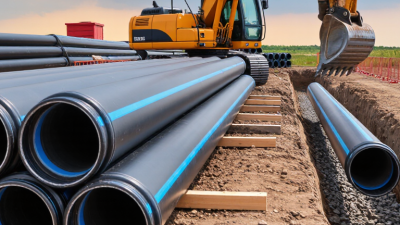
On a construction site, the pipe may arrive in long coils or straight sections. Its black surface often includes colored stripes that identify its intended service. Compared with rigid metal piping, polyethylene can bend around gentle curves and resist many forms of corrosion. That flexibility can reduce joints, leakage risks, and installation time. Still, it is not perfect for every project. Excessive heat, sharp objects, poor bedding, or incorrect fusion can cause serious performance problems.
This article explains what high density polyethylene pipe is and how its structure supports reliable service. It will examine common uses, key benefits, limitations, and joining methods such as butt fusion and electrofusion. Proper installation matters. A pipe can look sound above ground while hidden damage develops below it. For that reason, experienced contractors inspect material markings, follow manufacturer instructions, and verify pressure requirements before installation. Project engineers should also consult applicable local standards and independent testing guidance.
Some claims deserve caution. “Lifetime” performance depends on soil conditions, temperature, fluid chemistry, loading, and workmanship. A responsible evaluation considers all these factors instead of relying on marketing language. With informed selection and careful installation, this pipe can provide a durable solution for many demanding infrastructure systems.
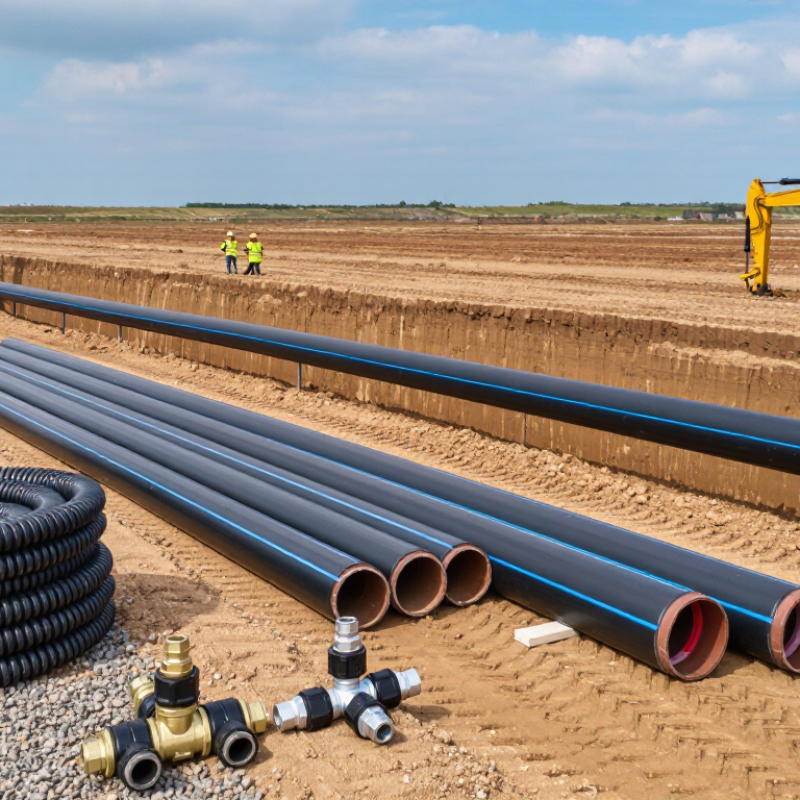
HDPE Pipe Definition: Density of 0.941–0.965 g/cm³ and Core Properties
High-density polyethylene (HDPE) pipe is a thermoplastic pipe made from polyethylene resin. Its density typically ranges from 0.941 to 0.965 g/cm³. This measurement helps distinguish HDPE from lower-density polyethylene materials. It also reflects the resin’s molecular structure and processing quality. Density alone, however, does not define pipe performance. It can mislead.
HDPE pipe combines low weight with strong resistance to impact, moisture, and many chemicals. Its smooth inner surface can reduce friction and support efficient fluid flow. The material also bends more easily than many rigid pipes, which helps it follow gradual ground movement. Properly fused joints can create a continuous pipeline with fewer leak points. The pipe remains tough in cold conditions, although extreme temperatures can affect installation methods.
Field inspections often show that handling matters as much as material selection. Scratches, poor alignment, or uncontrolled heating can weaken a joint. Fusion work needs clean surfaces, stable pressure, and trained operators. Wall thickness also matters, because the same density can appear in pipes with different pressure ratings. Engineers should review operating temperature, fluid type, burial conditions, and expected loads before choosing a size. HDPE is durable, but it is not indestructible. That detail is easy to overlook.
What Is High Density Polyethylene Pipe? - HDPE Pipe Definition: Density of 0.941–0.965 g/cm³ and Core Properties
| Property or Dimension | Typical Value or Range | Definition and Practical Significance |
|---|---|---|
| Material | High-density polyethylene (HDPE) | A thermoplastic polymer made from ethylene. HDPE pipe compounds are formulated for applications such as potable water, wastewater, gas distribution, mining, drainage, and industrial fluid transport. |
| Density | 0.941–0.965 g/cm³ | The density range commonly associated with HDPE resin and pipe compounds. Density is higher than that of many lower-density polyethylene grades and contributes to stiffness, strength, and chemical resistance. |
| Pipe Classification | Thermoplastic pressure or non-pressure pipe | HDPE pipe may be manufactured for pressure service or gravity-flow applications. The correct product designation depends on the applicable standard, outside diameter, wall thickness, material grade, and intended use. |
| Typical Material Designation | PE4710 or equivalent modern pressure-pipe grades | Pressure-pipe designations identify performance characteristics established by the relevant standard. The designation should not be used alone to determine allowable operating pressure; design standards and installation conditions must also be checked. |
| Outside Diameter Range | Commonly about 16 mm to more than 1,600 mm | Available sizes vary by manufacturing standard and application. Large-diameter HDPE pipe is frequently supplied in long lengths, which can reduce the number of field joints. |
| Wall Thickness Control | Specified by SDR or pressure class | The Standard Dimension Ratio (SDR) is the outside diameter divided by the minimum wall thickness. For the same material grade and temperature, a lower SDR generally indicates a thicker wall and higher pressure capability. |
| Typical Hydrostatic Design Basis | Determined by the applicable pipe standard | Allowable pressure depends on material classification, SDR, service temperature, safety factors, surge conditions, and installation requirements. It should be selected from certified design tables rather than estimated from density alone. |
| Flexibility | High compared with many rigid pipe materials | HDPE pipe can accommodate ground movement, bending, and alignment changes within the manufacturer’s allowable limits. Minimum bend radius depends on diameter, SDR, temperature, and whether the pipe is bent during installation or in service. |
| Joining Method | Butt fusion, electrofusion, and mechanical connections | Thermal fusion can create a continuous, leak-resistant piping system when performed by qualified personnel using controlled equipment and procedures. Mechanical joints may be used where disassembly or transitions to other materials are required. |
| Chemical Resistance | Generally strong resistance to many acids, alkalis, salts, and aqueous chemicals | Resistance varies with chemical concentration, temperature, exposure time, and mechanical stress. Compatibility should be confirmed for the specific chemical and operating conditions before use. |
| Water Absorption | Very low; typically less than 0.01% by mass | Low water absorption helps maintain dimensional stability and supports use in wet or buried environments. The exact reported value depends on the test method and material specification. |
| Thermal Conductivity | Approximately 0.4–0.5 W/(m·K) | HDPE is a relatively low-thermal-conductivity material. Heat-transfer behavior should be considered when evaluating temperature changes, thermal expansion, insulation, and freeze protection. |
| Melting Transition | Approximately 125–135 °C | This is a material transition range rather than a recommended operating temperature. Fusion parameters are established by the applicable joining procedure and equipment manufacturer. |
| Service Temperature | Commonly used from below 0 °C to approximately 60 °C for pressure applications | The allowable pressure generally decreases as temperature increases. Actual limits depend on the pipe compound, standard, fluid, duration, and installation conditions. |
| Abrasion Resistance | High in many slurry and abrasive-service applications | The smooth interior and resilient polymer structure can reduce wear from suspended solids. Performance depends on particle size, concentration, velocity, temperature, and pipe geometry. |
| Hydraulic Characteristics | Smooth internal surface; low friction relative to many conventional pipes | The low-roughness interior can support efficient fluid flow and reduce deposits. Hydraulic calculations should use the actual internal diameter, temperature, flow rate, and appropriate design coefficients. |
| Electrical Behavior | Nonconductive and electrically insulating | HDPE does not provide electrical grounding or continuity. Special precautions may be needed where static charge, stray current, or electrical bonding is a concern. |
| Common Applications | Water, wastewater, gas, drainage, mining, irrigation, and industrial piping | Application suitability depends on regulatory approval, pipe classification, chemical compatibility, pressure requirements, installation method, and local codes. |
| Installation Considerations | Trench, sliplining, pipe bursting, directional drilling, and above-ground installation | HDPE’s flexibility and fusion-jointed construction make it suitable for several installation methods. Bedding, burial depth, thermal movement, flotation risk, and joining quality must be evaluated for each project. |
| Recyclability | Recyclable as a thermoplastic material | Clean, separated HDPE can be mechanically recycled into secondary products. Recycling feasibility depends on collection systems, contamination, additives, and local processing capabilities. |
Important note: Values shown are representative technical ranges for HDPE pipe materials and may vary by resin grade, pipe standard, SDR, manufacturing process, temperature, and service conditions. Always verify project-specific requirements against the applicable national or international standard and the manufacturer’s certified data.
Related Posts
-
How to Choose the Right HDPE Plastic Pipe?
-
How to Choose the Right HDPE Water Pipe for Your Project?
-
What Is the Best HDPE Pipe for Global Buyers?
-
How to Choose the Best HDPE Water Pipe?
-
Why Poly Water Pipe is the Best Solution for Your Irrigation Needs
-
What is Poly Water Pipe? Benefits, Uses, and Installation Guide