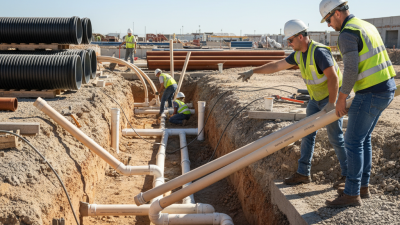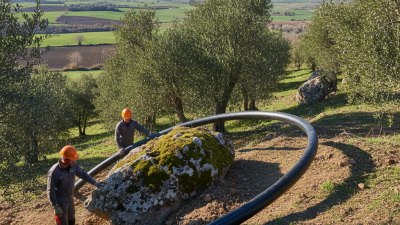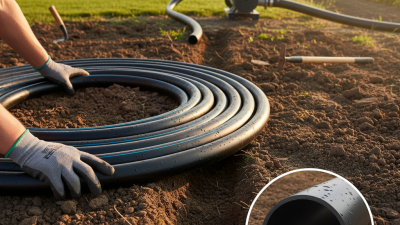
Vinidex manufacturers and supplies a broad range of products & systems to suit a range of applications.
Vinidex’s products and systems are versatile and can be used in a variety of markets and applications.
Choosing the right hdpe plastic pipe is more than comparing prices or reading a product catalogue. The correct choice depends on pressure, temperature, soil conditions, fluid type, and installation method. A pipe used for municipal water may require different performance from one installed for irrigation, drainage, or industrial service.
In real projects, small details often determine long-term reliability. Measure the required flow rate carefully. Check the pipe’s pressure rating, outside diameter, wall thickness, and joining method. Butt fusion can create strong, leak-resistant connections, but it requires trained technicians, clean equipment, and controlled heating. Electrofusion may suit restricted areas, although fittings can increase the total budget. I have seen projects become complicated because designers considered the pipe but overlooked access for fusion equipment.
Material quality also deserves close attention. Select products supported by clear technical data, traceability, and recognized testing requirements. Ask suppliers about resin classification, operating temperature, chemical resistance, and expected service conditions. A qualified engineer should review the design before purchasing large quantities. Local codes and project specifications must guide the final decision.
Not every project needs the most expensive option. Sometimes, the cheapest pipe creates higher installation and maintenance costs later. That is easy to miss. Soil movement, sunlight exposure, dragging damage, and poor alignment can affect performance, even when the pipe itself is excellent. A thoughtful selection process compares the complete life cycle, not only the invoice. This guide explains the key checks, practical questions, and common mistakes that help buyers choose with greater confidence. Some assumptions may still need testing on site.
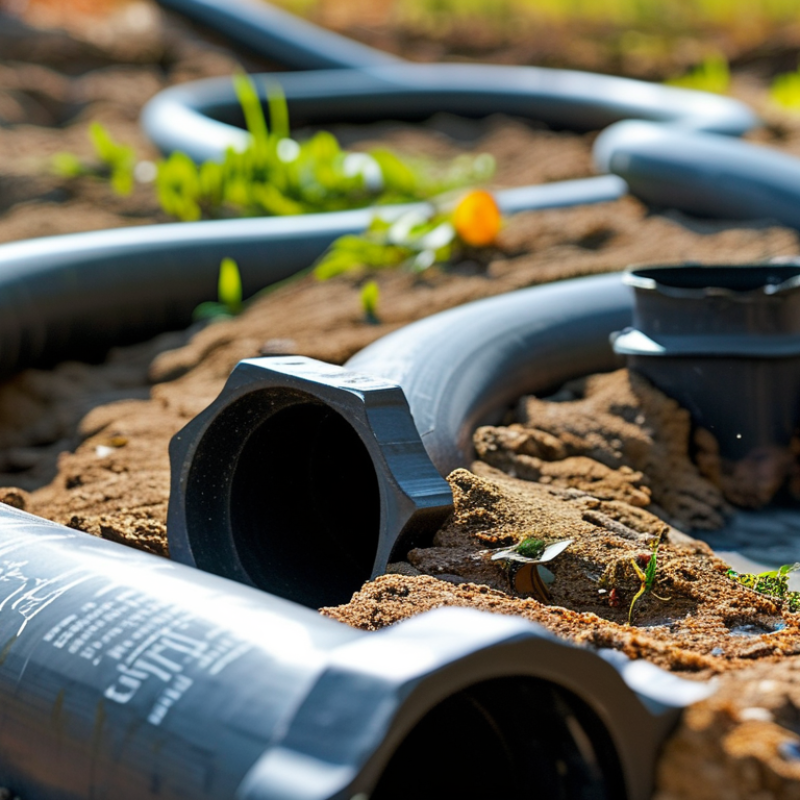
HDPE pipe is made from high-density polyethylene, a strong thermoplastic with a smooth inner surface. It bends slightly instead of cracking easily under ground movement. Heat joins the pipe sections, creating a continuous, leak-resistant line when the work is done correctly. This connection method also reduces the number of mechanical fittings.
HDPE is widely used for drinking-water networks, irrigation, wastewater, stormwater drainage, and industrial process lines. Approved grades can serve gas distribution systems under strict local standards. Mining operations may use it for slurry because the material handles abrasion better than many rigid pipes. Its low weight helps crews move long coils around uneven job sites. That practical advantage matters.
Not every HDPE pipe suits every project. Check the pressure rating, diameter, wall thickness, temperature range, and fluid compatibility before selection. A pipe for cold water may perform poorly with hot liquids. Sunlight exposure also requires suitable protection.
Field inspections often reveal weak fusion joints, not weak pipe material. This distinction is important. A rushed installation can undermine excellent engineering.
I have seen specifications focus heavily on pipe size while ignoring soil movement and access for repairs. That is an easy mistake to repeat. Reliable choices combine tested materials, qualified fusion technicians, documented inspections, and local regulations. Keep the application clear.
How to Choose the Right HDPE Plastic Pipe?
How to Define the Required Pipe Size and Pressure Rating
Pipe sizing should begin with flow, not the nominal diameter. Calculate peak flow, acceptable velocity, pipe length, elevation change, and fitting losses. HDPE has a smooth internal surface, and the Plastic Pipe Institute commonly applies a Hazen-Williams coefficient of 150 for hydraulic calculations. Still, field conditions matter. A muddy trench or poorly aligned joint can change performance.
Pressure rating requires more than reading a pipe label. Add normal operating pressure, static head, pump shutoff pressure, and surge pressure. Then apply temperature and installation adjustments. PPI TR-4 lists a 1,600 psi hydrostatic design basis for PE4710 material at 73.4°F. Using a 0.5 design factor gives an 800 psi hydrostatic design stress. Under the pressure equation, SDR 11 commonly provides about 160 psi at that reference temperature, while SDR 17 provides about 100 psi. These values are not universal guarantees.
Check the actual fluid temperature and pressure cycle. ISO 4427 also requires attention to material classification, wall thickness, and service conditions. A larger outside diameter does not always mean a larger flow passage. Compare calculated inside diameter, minimum wall thickness, and future demand. I have seen designs that looked safe on paper but ignored pump startup surges. That oversight is easy to repeat. Request certified material data, verify the SDR, and have a qualified engineer review the final pressure calculation.
For PE100 pipes at 20°C, the nominal pressure rating is closely related to the Standard Dimension Ratio (SDR). Lower SDR values have thicker walls and higher pressure capacity.
The values shown are based on the ISO design relationship using a 10 MPa minimum required strength and a design coefficient of 1.25. Actual pipe selection should also consider operating temperature, surge pressure, flow rate, installation conditions, and applicable local standards.
| Nominal OD | Approx. ID at SDR 11 | Approx. ID at SDR 17 | Typical Use Consideration |
|---|---|---|---|
| 110 mm | 90.0 mm | 97.1 mm | Service connections and small distribution lines |
| 160 mm | 130.9 mm | 141.2 mm | Distribution mains and moderate flow requirements |
| 250 mm | 204.5 mm | 220.6 mm | Higher-flow transmission and industrial pipelines |
Choosing an HDPE pipe starts with its material grade, not its color or wall thickness. PE80 and PE100 grades are classified by Minimum Required Strength after 50 years at 20°C. ISO 9080 and ISO 12162 identify PE100 with an MRS of 10 MPa, while PE80 is rated at 8 MPa. That difference affects pressure design and long-term safety.
Check the application temperature carefully. Higher temperatures reduce allowable pressure, even when the pipe looks unchanged. For North American projects, ASTM D3350 cell classification and ASTM D3035 dimensions help verify material and manufacturing requirements. The Plastics Pipe Institute’s PPI TR-4 lists PE4710 compounds with a hydrostatic design basis of 1,600 psi at 73°F for qualifying applications. However, that value is not a universal working pressure. SDR, joining quality, surge, temperature, and installation conditions still control the final selection.
Match the pipe to the governing standard. ISO 4427 and EN 12201 are common references for pressure water systems, while ASTM standards are widely used in other specifications. Request the compound designation, MRS or HDB rating, SDR, pressure class, and third-party test records. Do not rely on a generic “PE100” label alone. I have seen specifications overlook temperature derating and electrofusion training. That mistake is easy to prevent. A practical review should compare the design pressure, soil conditions, fluid chemistry, and expected service life before approval.
| Application | Recommended Material Grade | Typical Standard | Key Design Property | Suitable Pipe Selection | Important Selection Notes |
|---|---|---|---|---|---|
| Potable Water | PE100 or PE4710 | ISO 4427 / EN 12201 ASTM D3035 / ASTM F714 |
Long-term hydrostatic strength; resistance to slow crack growth | Pressure-rated pipe with an appropriate SDR, such as SDR 11, SDR 13.6, SDR 17, or SDR 21 | Confirm that the pipe complies with the local drinking-water approval requirements. Select the pressure class after accounting for operating temperature, surge, and installation conditions. |
| Natural Gas Distribution | PE80 or PE100; PE4710 where permitted by local regulations | ISO 4437 / EN 1555 ASTM D2513 |
High resistance to slow crack growth and rapid crack propagation | Gas-service pipe with a qualified pressure rating and approved joining procedure | Use only materials, dimensions, fusion procedures, and traceability systems accepted by the gas authority. Do not substitute water-pipe grades without approval. |
| Sewer and Drainage | PE80 or PE100; non-pressure grades may also be suitable | ISO 4427 for pressure applications EN 12666 or ASTM F714 where applicable |
Flexibility, abrasion resistance, and chemical resistance | Solid-wall or profiled-wall pipe selected for the required ring stiffness or pressure class | For gravity systems, verify ring stiffness, deflection limits, bedding design, and external loading rather than selecting solely by pressure SDR. |
| Industrial Chemicals | PE100 or a chemically compatible HDPE grade | Project specification and applicable ISO, EN, or ASTM dimensional standard | Chemical compatibility at the actual concentration and temperature | Pressure or non-pressure pipe designed for the specific fluid service | Check chemical compatibility charts and manufacturer test data. Permeation, temperature, concentration, and cyclic loading can significantly affect service life. |
| Mining and Slurry | PE100 or PE4710 with suitable abrasion performance | ISO 4427 / EN 12201 for pressure pipe ASTM F714 where applicable |
Impact strength, flexibility, abrasion resistance, and fusion reliability | Heavy-wall pressure pipe, often with a lower SDR, subject to hydraulic and structural calculations | Evaluate slurry velocity, particle size, density, temperature, support conditions, vacuum risk, and surge. Abrasion performance is application-specific. |
| Marine and Subsea | PE100 or PE4710, subject to project qualification | ISO 4427 / EN 12201 Project-specific marine requirements |
Buoyancy control, fatigue resistance, hydrostatic strength, and seawater exposure | Large-diameter solid-wall pipe with design verification for flotation and installation loads | Check towing, sinking, bending radius, ballast, wave action, external pressure, and connection loads. A standard pressure rating alone is not sufficient. |
| Low-Temperature Service | PE80, PE100, or PE4710 with verified impact performance | Applicable ISO, EN, or ASTM product standard | Impact resistance and ductility at the minimum operating temperature | Pressure-rated pipe with installation procedures suitable for cold conditions | HDPE remains ductile at low temperatures, but handling impact, fusion conditions, and pressure derating must be evaluated for the project temperature range. |
| High-Temperature Service | PE100 or PE4710 only when temperature derating is documented | Applicable product standard plus project design requirements | Reduced long-term strength at elevated temperature | Pipe with a pressure rating corrected for continuous and intermittent temperature exposure | Do not use the 20 °C pressure rating directly at higher temperatures. Apply the standard’s temperature derating factors and verify thermal expansion. |
| Non-Pressure Cable Duct | General-purpose HDPE or an electrically suitable HDPE compound | Applicable electrical, telecommunications, or conduit standard | Crush resistance, flexibility, dimensional stability, and low-friction installation | Smooth or internally lubricated duct selected by cable diameter, pulling force, and installation method | Confirm minimum bend radius, wall thickness, ovality, pull-through requirements, UV exposure, and compatibility with direct burial or directional drilling. |
| Irrigation | PE80, PE100, or PE4710 | ISO 4427 / EN 12201 ASTM D3035 / ASTM F714 |
Pressure resistance, flexibility, and resistance to cyclic operation | SDR selected from the maximum working pressure, including pump start-up and water hammer | Consider seasonal temperature, ultraviolet exposure, surge pressure, filtration, fittings, and the required joining method. |
| Material Classification | PE80 or PE100 | ISO 9080 and ISO 12162 | MRS value at 20 °C for a 50-year reference period | PE80: MRS 8.0 MPa PE100: MRS 10.0 MPa |
MRS is a material classification value, not the pipe’s allowable working pressure. Pipe pressure depends on wall thickness, outside diameter, safety coefficient, temperature, and standard. |
| North American PE Designation | PE4710 or PE3608 | ASTM D3350, ASTM D3035, ASTM F714, and applicable PPI recommendations | Hydrostatic design basis and resistance to long-term failure mechanisms | Select the dimensional standard and pressure rating specified for the service | PE4710 and PE3608 are North American classification systems; they should not be treated as direct one-to-one equivalents of PE100 or PE80 without checking the governing standard. |
| General rule: Select the pipe only after confirming fluid type, operating pressure, surge pressure, temperature range, pipe diameter, SDR or wall thickness, installation loads, joining method, regulatory requirements, and the applicable product standard. The final design should be verified by a qualified engineer and the local authority having jurisdiction. | |||||
Choosing the right HDPE pipe joining method depends on pressure, diameter, site access, and installation conditions. Butt fusion creates a continuous, leak-resistant joint when pipe ends are clean, aligned, and heated correctly. It suits long runs with enough working space. Electrofusion is useful near walls, tight trenches, or repair points, but the surface must be scraped and kept dry. Mechanical fittings can simplify connections, although they need careful tightening and regular inspection.
Installation quality matters as much as pipe selection. A qualified crew should check temperature, fusion pressure, cooling time, and alignment records. The trench should provide stable bedding and enough room for controlled pipe movement. Avoid dragging pipe across sharp stones. Small scratches may become serious stress points later. Local codes, pressure ratings, and the manufacturer’s technical instructions should guide every decision. A joint may look smooth but still fail if cooling is interrupted.
Tips: Clean every joining surface. Protect electrofusion areas from rain and dust. Use calibrated equipment. Test the completed line before backfilling. Leave room for thermal expansion where conditions require it. Do not rush the cooling stage. Field experience often exposes weak habits, and joining methods deserve a second review when the site changes.
Quality should be judged by evidence, not by a polished quotation. Check resin classification, wall thickness, outside diameter, and pressure rating. Ask for current test reports and production traceability. A reliable manufacturer can explain how each pipe batch was tested. Inspect the pipe surface too. It should look even, clean, and free from cracks, bubbles, or deep scratches. Small visual defects may reveal poor handling, although appearance alone cannot prove performance.
Tips: Compare total installed cost, not only the pipe price. Include fittings, welding equipment, transport, trench work, testing, and future repairs. A cheaper pipe may require more careful installation. That difference matters.
Service life depends on temperature, pressure cycles, soil conditions, sunlight exposure, and chemical contact. Request a design calculation for the actual project, rather than accepting a general “long-life” claim.
Supplier evaluation also needs practical questions. Can the team provide fusion guidance, delivery records, technical drawings, and responsive after-sales support? Ask for references from similar projects, but review them critically. One successful installation does not guarantee every result.
In my experience, unclear documentation creates more risk than a modest price difference. Even experienced buyers can overlook storage damage or mismatched fittings. Leave room for inspection before installation.