How to Choose the Best HDPE Water Pipe?
Choosing the best hdpe water pipe begins with understanding the project, not selecting the cheapest product. Pipe diameter, pressure rating, water temperature, soil conditions, and installation method all influence performance. A pipe designed for a shallow residential trench may not suit a deep municipal pipeline. The wrong choice can cause difficult repairs, low flow, or premature failure.
This guide examines practical factors used by engineers, contractors, and experienced water-system installers. We will consider PE grade, SDR classification, outside diameter, pressure capacity, jointing methods, and compatibility with fittings. Product markings and supplier documentation matter. Look for traceable manufacturing information, tested performance, and compliance with recognized standards such as ISO 4427 or equivalent regional requirements. Certification alone is not everything, but missing documentation is a warning sign.
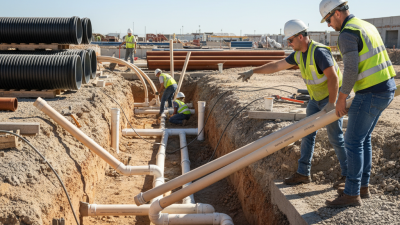
Installation conditions deserve equal attention. A flexible hdpe water pipe can handle ground movement well, yet poor bedding, sharp stones, or improper fusion can still create problems. Picture a pipe resting on uneven gravel after heavy rain. Its material may be strong, but the installation is not. That detail is easy to overlook. This article also compares service life, maintenance needs, environmental exposure, and total project cost. There is no perfect pipe for every site. Even experienced professionals may revise their selection after reviewing soil reports or hydraulic calculations. Use this information as a reliable starting point, then confirm specifications with qualified engineers, local requirements, and the manufacturer’s technical data.
Define Water Demand: Size HDPE by Flow, Velocity, and Hazen–Williams C≈150
How to Choose the Best HDPE Water Pipe?
Define water demand before choosing an HDPE water pipe. Estimate average use, peak demand, and future expansion. A small housing project may need 2 liters per second, while irrigation demand can rise sharply at dawn. Use measured flow when possible. Guesswork often creates expensive corrections.
Size the pipe for the required flow and a practical velocity. Many water systems operate effectively between 0.6 and 2.0 meters per second. Excessive velocity increases friction, noise, and surge risk. Very low velocity can leave water stagnant. The inside diameter matters, not only the nominal pipe size. HDPE wall thickness changes the available flow area.
For preliminary friction-loss calculations, engineers commonly use the Hazen–Williams equation with C≈150 for smooth HDPE. This value is useful, but it is not magic. Include pipe length, elevation changes, valves, bends, and entrance losses. A 180-meter run with several elbows may lose more pressure than a simple chart suggests. Check the result against pump pressure, minimum service pressure, and the pipe’s pressure rating. Field readings can expose errors. Real projects are messier. Recheck peak demand, temperature, and future connections before ordering material.
Verify Material Grade: PE100 MRS 10 MPa and 50-Year Design Basis
When choosing an HDPE water pipe, verify the material grade before comparing prices or wall thickness. Look for PE100 classification and an MRS value of 10 MPa. MRS means Minimum Required Strength under defined testing conditions, not the pipe’s working pressure. That difference matters. A PE100 pipe can support demanding water applications, but its pressure rating depends on diameter, wall thickness, SDR, temperature, and safety factors.
Ask for traceable test documents from the manufacturer or supplier. These should identify the polyethylene grade, production batch, hydrostatic test results, and relevant standards. Check that the material certificate matches the pipe markings. In the field, I have seen small documentation gaps create larger installation doubts. A certificate without batch traceability is weaker evidence. It may still be genuine, but it deserves closer review.
The 50-year design basis also needs careful interpretation. It describes long-term performance under specified conditions, commonly linked to water temperature and sustained internal pressure. It does not guarantee fifty years in every soil, climate, or installation method. Confirm operating temperature, surge pressure, burial depth, joining quality, and exposure to sunlight. Inspectors should also review storage damage before installation. Scratches are easy to overlook. They should not be. A practical selection records these conditions, then checks whether the chosen PE100 pipe meets the required pressure class with suitable engineering allowance.
Match Pressure Class: Select SDR from ISO 4427 and Design Pressure
How to Choose the Best HDPE Water Pipe?
Match Pressure Class: Select SDR from ISO 4427 and Design Pressure
SDR is not a decorative number. It links a pipe’s outside diameter to its wall thickness. A lower SDR means a thicker wall and higher pressure capacity. Under common PE100 water-service assumptions at 20°C, SDR11 is commonly rated PN16, while SDR17 is commonly rated PN10. These values align with pressure classifications referenced by ISO 4427, but they are not universal guarantees.
Design pressure must include operating pressure, surge, temperature, and installation conditions. ISO 4427 uses long-term material strength and a design coefficient, rather than short laboratory pressure alone. The Plastics Pipe Institute’s TR-4 data also shows how approved polyethylene materials are evaluated through hydrostatic design strength. Check the material grade and certificate.
A neat SDR table can mislead. A pump starting suddenly may create a pressure spike beyond the normal gauge reading. Water hammer matters. For example, a pipe operating at 8 bar may still need a higher class if transient pressure adds 3 bar. Engineers should compare the total design pressure with the selected PN value, then apply temperature and service-life corrections. AWWA C906 also requires attention to pressure rating, dimensions, and joining quality. Sometimes, the cheapest SDR is not the safest choice. Reviewing actual flow records and surge calculations is worth the extra hour.
Check Site Conditions: Allow for 0.2 mm/m·°C Thermal Expansion
How to Choose the Best HDPE Water Pipe?
Site conditions can change HDPE pipe dimensions more than many selection guides suggest. The PPI Handbook of Polyethylene Pipe reports a thermal expansion coefficient near 0.2 mm/m·°C. This value is widely used for preliminary HDPE design. It means a 100-meter pipe exposed to a 30°C temperature rise may expand about 600 millimeters. That is half a meter of movement.
The calculation is simple. The site is not.
Before choosing pipe size, inspect sunlight, trench depth, soil restraint, operating temperature, and installation timing. An above-ground section beside a concrete wall needs different detailing from a buried section in compacted soil. Allow space for expansion near valve chambers, supports, and directional changes. Long exposed runs may need controlled offsets or expansion loops, depending on engineering calculations.
A common mistake is treating 0.2 mm/m·°C as a fixed movement allowance for every project. It is a design reference, not a complete answer. The actual temperature range may be smaller, or much larger, than expected. Record pipe temperature during installation when possible. Review the calculation against project drawings and relevant standards, including ISO 4427 and AWWA C906. Field checks matter. Plastic pipe can look perfectly aligned today and still push against a rigid fitting months later.
Confirm Compliance: Use ASTM D3035, ISO 4427, and Fusion QA Tests
How to Choose the Best HDPE Water Pipe?
Confirming compliance is more than checking a certificate. ASTM D3035 helps verify pipe dimensions, pressure ratings, and material performance for water service. ISO 4427 provides another important framework for polyethylene pipes, fittings, and system requirements. Always confirm the exact standard edition and application scope.
Ask the supplier for batch records, resin identification, dimensional reports, and pressure-test results. Traceable documents matter when a pipe fails years later. In field inspections, I would also check surface quality, ovality, wall thickness, and clear markings. A clean appearance is useful, but it proves very little alone. The pipe may look excellent and still have weak documentation.
Tips: Review fusion quality assurance before approval. Check heating temperature, alignment, pressure, cooling time, and operator records. Visual inspection should identify uneven beads, contamination, or movement during cooling. For critical projects, use destructive or non-destructive verification where suitable. Fusion equipment should be calibrated, and operators should follow a controlled procedure. Small recording gaps can become large questions later. Do not assume every fusion joint is reliable because the bead looks smooth. A qualified inspector, consistent testing, and complete records provide stronger evidence than confidence alone.
How to Choose the Best HDPE Water Pipe?
Confirm Compliance: ASTM D3035, ISO 4427, and Fusion QA Tests
This chart shows the nominal pressure rating for PE100 pipes at 20°C under ISO 4427 using common SDR classes. The values are calculated from the ISO pressure relationship
PN = 20 × MRS ÷ [C × (SDR − 1)], using an MRS of 10 MPa and a design coefficient of 1.25. Actual selection must also consider temperature, surge pressure, installation conditions, and the manufacturer’s certified product data.
For procurement, verify that dimensions and material requirements comply with the applicable ASTM D3035 or ISO 4427 specification, and request documented fusion quality assurance records, including qualified procedures, operator certification, equipment calibration, joint inspection, and pressure or destructive test results where required.