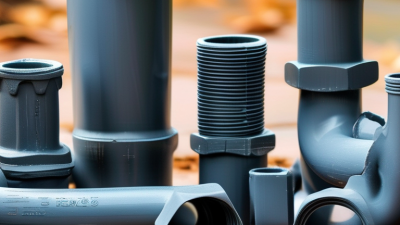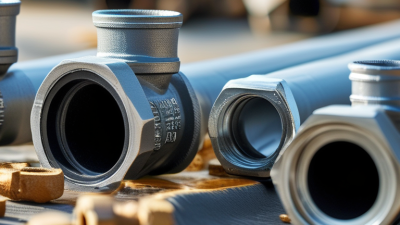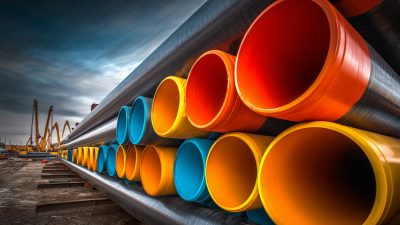
Vinidex manufacturers and supplies a broad range of products & systems to suit a range of applications.
Vinidex’s products and systems are versatile and can be used in a variety of markets and applications.
Buying polyethylene fittings is not just a matter of matching pipe diameter. A reliable pe fitting must suit the pipe’s material, pressure rating, joining method, and operating conditions. These compact components connect long pipe runs, yet a small mismatch can complicate installation or weaken system performance. Small parts matter.
The American Society of Civil Engineers’ 2021 Report Card for America’s Infrastructure estimated that the United States loses about six billion gallons of treated water each day through leaking pipes. That figure does not mean fittings alone cause the losses. It does show why sound material selection and dependable connections deserve attention. The Plastics Pipe Institute’s Handbook of PE Pipe offers technical guidance on polyethylene pipe design, material properties, and system performance. Its core lesson is practical: performance depends on the full system, not one product label.
This guide turns that principle into ten buying checks. It covers dimensions, pressure class, resin compatibility, connection type, temperature, installation tools, and supplier documentation. It also explains why a low purchase price may not reflect the cost of extra labor, replacement parts, or downtime. A fitting can look right and still be wrong. Even experienced buyers can overlook details when specifications are incomplete, so verify them before ordering. No checklist replaces project-specific engineering review, but careful questions can help you compare options with greater confidence.
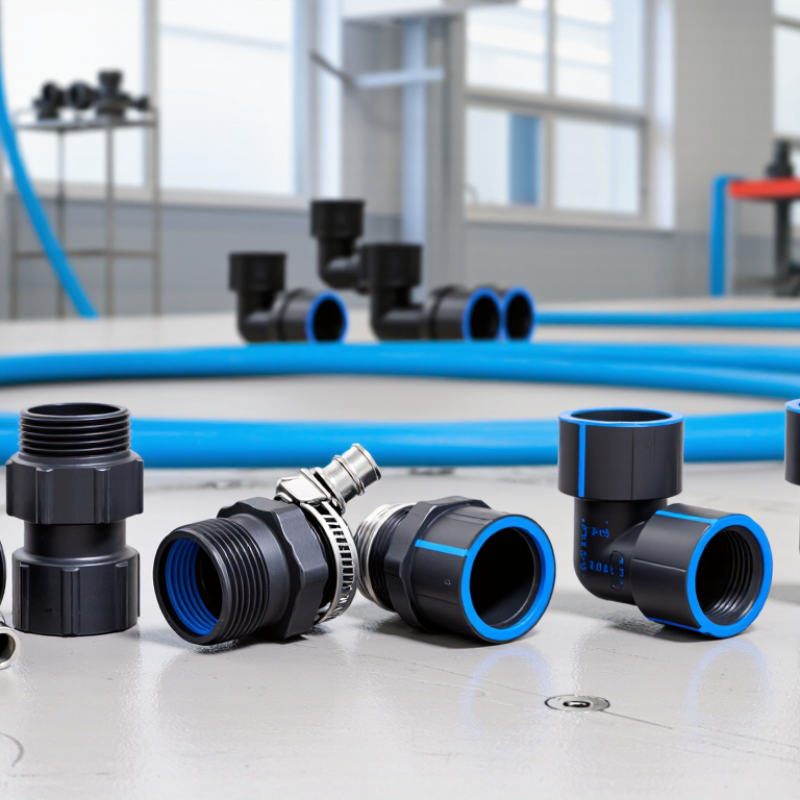
PE fittings connect polyethylene pipe while allowing a system to branch, change direction, or transition to another material. Butt-fusion fittings are common on larger water mains and industrial lines, where pipe ends are heated and pressed together. Electrofusion fittings use embedded wires to create a fused joint, often helping with repairs or tight spaces. Socket-fusion fittings suit smaller pipes, such as those used in irrigation. Mechanical compression fittings can simplify certain low-pressure connections, but their limits matter. Check the details.
Tip: Match the fitting type to pipe diameter, material, and pressure rating. Also check the pipe’s SDR; two pipes with the same diameter may not have the same wall thickness.
Applications differ. Elbows guide water around a wall or trench bend, while tees split flow toward separate branches. Reducers connect different pipe sizes, and couplings join straight sections. For buried networks, joint access and installation space affect the choice. A cramped trench can make a fusion setup difficult, even when the fitting is suitable on paper.
Tip: Confirm the manufacturer’s joining instructions and use compatible equipment. Keep fusion surfaces clean and dry, and allow joints to cool before handling. I have seen small alignment errors become frustrating rework. It is easy to overlook support and restraint needs, so review the whole layout—not just the fitting—before installation.
Before choosing PE fittings, define the pipeline’s job and its worst operating conditions. Record the fluid, design flow, working pressure, expected surges, and temperature range. Note whether the line will be buried, exposed to sunlight, or installed where movement may stress joints. The Plastics Pipe Institute’s TR-4 technical listing assigns PE4710 resin a hydrostatic design basis of 1,600 psi at 73°F (23°C). That figure describes the resin classification, not an installed fitting’s allowable working pressure. Check the fitting’s own pressure rating and the system design method. Higher temperatures can reduce pressure capacity, so use the manufacturer’s temperature-adjusted rating. A small oversight here matters.
Tips: List normal and peak pressure separately. Include pump starts and valve closures. Confirm fluid compatibility, pipe dimensions, and SDR before matching fittings. Check the joining method and site conditions, too. A plan that says only “water line” is not specific enough; water temperature, treatment chemicals, and pressure cycling can change the selection. If a value is uncertain, mark it for confirmation rather than guessing.
PE fittings can look interchangeable on a bench, but small differences matter. Check the governing standard before comparing prices: ISO 4427 covers polyethylene piping systems for water supply, while ASTM D3261 covers polyethylene plastic fittings for butt fusion. Confirm the exact edition and application listed on the product documents. The Plastics Pipe Institute’s Handbook of Polyethylene Pipe describes a 50-year design basis for PE pipe; that is not a guarantee for every installation. Correct fitting selection still matters.
Tip: Match dimensions, not just nominal size. Verify the pipe’s outside diameter, wall thickness, and SDR against the fitting’s stated range. A caliper at the cut end can catch an oversize or oval pipe before assembly. Also check pressure rating and connection type. A fitting that fits physically may not meet the system’s pressure requirements.
Tip: Confirm material compatibility and fusion instructions. Ask for resin designation, traceability, and documented compatibility with the pipe material and joining method. Follow the specified heating and cooling cycle; do not assume similar-looking PE grades fuse identically. It can feel like paperwork overkill. Still, I would pause if a supplier cannot provide dimensional tolerances or material records, and verify them before installation.
PE fittings can look identical on a shelf, yet differ in resin, dimensions, and pressure capability.
10 Tips for Buying PE Fittings
Tip: Compare the full delivered cost, not just the unit price. Include freight, minimum order quantities, lead times, and replacement terms. A low quote is less useful if common sizes arrive late. Check the details. The US Environmental Protection Agency’s 2023 Drinking Water Infrastructure Needs Survey and Assessment estimates $625 billion in drinking water infrastructure needs over 20 years. That scale makes dependable sourcing and clear records practical priorities, not paperwork for its own sake.
Tip: Ask suppliers for current product data sheets, pressure ratings, dimensional details, and batch traceability. Confirm that fittings match the pipe material and joining method specified for the project. Request applicable conformity documents and test reports, then verify they identify the actual product range. Standards and requirements vary by market, so do not assume one certificate covers every application. A neat spreadsheet still misses one thing: how quickly a supplier answers when a fusion parameter is unclear.
Tip: Compare technical support before placing a large order. Ask who handles installation questions, how quickly they respond, and whether guidance is available for storage and handling. Check packaging too: caps and clean, undamaged surfaces matter on site. Keep a written record of answers and delivery promises. It sounds obvious. Yet teams sometimes overlook support until a fitting is already needed.
| # | Buying Tip | What to Compare or Verify | Useful Evidence or Questions | Common Warning Sign | Suggested Score Weight |
|---|---|---|---|---|---|
| 1 | Confirm the application and governing standard | Check the intended service, market, fitting type, and applicable standard. Standards may include ISO 4427 or EN 12201 for water systems, or ASTM D3261 for certain polyethylene fittings. | Ask which standard and edition the quoted product is manufactured and tested against, and confirm that it matches the project specification. | A quotation says only “PE fitting” without identifying the applicable standard or intended service. | 12% |
| 2 | Match material, size, and pressure requirements | Verify polyethylene material designation, nominal size, dimensional series or SDR, pressure rating, and compatibility with the pipe system. | Request dimensional data sheets and confirm the specified size range, SDR compatibility, and pressure class for the design conditions. | Pressure or dimensional claims are provided without stated conditions, standard, or supporting product data. | 14% |
| 3 | Check fitting type and joining compatibility | Compare butt-fusion, electrofusion, socket-fusion, or mechanical options as appropriate. Confirm compatibility with the pipe material, dimensions, and joining method. | Ask for installation instructions, fusion parameters where applicable, and any requirements for compatible equipment or operators. | The supplier cannot explain the joining method or compatibility limitations. | 10% |
| 4 | Compare complete, like-for-like pricing | Compare unit price alongside tooling or accessories, packaging, freight, insurance, duties, taxes, and delivery terms. | Request an itemized quotation with currency, validity period, quantities, delivery location, and stated Incoterms where relevant. | A low unit price is presented without freight, delivery terms, or other potential charges. | 12% |
| 5 | Review lead time and supply capacity | Compare quoted production and transit times, stock availability, minimum order quantities, and the supplier’s ability to meet phased deliveries. | Ask for a written delivery schedule and confirmation of which items are in stock versus made to order. | Delivery dates are described as guaranteed but are not confirmed in the quotation or order terms. | 10% |
| 6 | Request traceable quality documentation | Check what inspection, test, and traceability records are available for the product and production lot. | Ask for sample inspection or test reports, lot or batch identification details, and a description of how records link to supplied items. | Documents are undated, unrelated to the quoted product, or do not identify the applicable test or lot. | 11% |
| 7 | Validate certificates and claims | Confirm that any certificates, approvals, or conformity claims are relevant to the product, application, market, and required standard. | Check the issuing body, scope, product type, validity, and whether the project or local regulations require a particular approval. | A general certificate is offered as proof of compliance for a different product, standard, or application. | 9% |
| 8 | Compare packaging, handling, and storage guidance | Review packaging protection, marking, storage instructions, and precautions for keeping fittings clean and undamaged before installation. | Ask how products are protected during transport and request written storage and handling instructions. | Fittings arrive loose or damaged, or the supplier provides no guidance for storage and inspection on receipt. | 6% |
| 9 | Assess technical and after-sales support | Compare response times, access to technical staff, installation guidance, complaint handling, and warranty or return terms. | Ask who handles technical queries, how nonconforming goods are reported, and what information is needed to investigate a claim. | Support responsibilities and warranty conditions are unclear or only stated verbally. | 9% |
| 10 | Use a documented comparison and trial order | Score each offer against the same specification, commercial terms, documents, delivery plan, and support requirements. For new suppliers, consider a controlled sample or trial order where practical. | Keep a written evaluation, clarify exceptions before ordering, and inspect received goods against the purchase specification. | The decision is based only on headline price, with no record of technical or delivery differences. | 7% |
Suggested use: The score weights are an example evaluation framework and can be adjusted to suit project risk, local regulations, and procurement priorities. Confirm applicable standards and approval requirements for the specific application and market.