

China Top PVC Pipes and Fittings Suppliers?
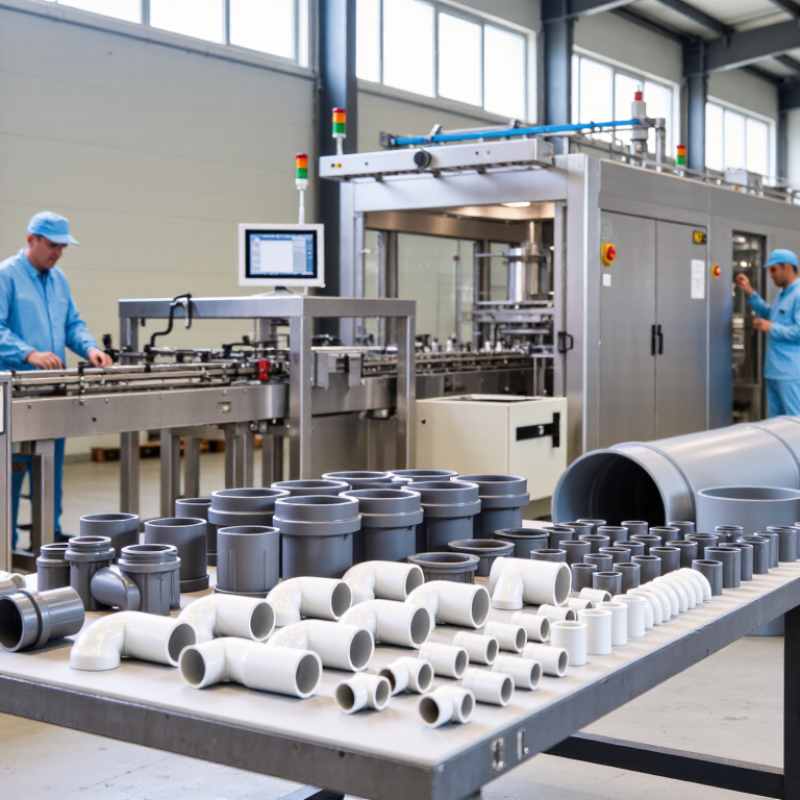
Choosing among China’s top PVC pipes and fittings suppliers requires more than comparing factory prices. A reliable supplier must prove material quality, production consistency, testing capability, and export experience. This guide examines manufacturers that serve water supply, drainage, irrigation, conduit, and industrial applications.
David Fink, a former president of the Plastics Pipe Institute, offers a useful principle: “Performance starts with the application, not the catalog.” That idea matters when reviewing pvc pipes and fittings. A supplier may advertise impressive pressure ratings, yet the product may not suit local temperatures, soil conditions, chemicals, or installation methods. Request technical data sheets, dimensional reports, pressure-test records, and recent project references. Inspect the details. Wall thickness matters.
Factory experience also deserves attention. Look for controlled PVC resin formulas, stable extrusion lines, calibrated molds, and documented quality procedures. Certifications such as ISO 9001, NSF, WRAS, CE, or local equivalents can support credibility, but certificates should be verified. A logo alone proves little. Ask for batch numbers and independent laboratory results when the application is critical.
The shortlist is never perfect. Some suppliers communicate well but provide weak technical evidence. Others offer excellent fittings but limited customization. Price can distract buyers from warranty terms, packaging strength, lead times, and replacement support. A careful comparison should consider the complete supply chain, from resin selection to container loading. Small details matter. This approach helps buyers identify dependable Chinese suppliers and avoid decisions based only on glossy catalogs or temporary discounts.
China’s PVC Pipe Industry: 2024 Output, Export, and Demand Data
China Top PVC Pipes and Fittings Suppliers?
China’s PVC pipe industry remained large in 2024, although published figures differ by definition. Public industry estimates place total plastic pipe output near 16–17 million metric tonnes. PVC products represented a major share, supported by water supply, drainage, agriculture, and building renovation projects. The numbers are not perfectly aligned. Some reports count fittings, recycled content, or only large factories.
Export activity stayed significant. Customs-based estimates suggest China shipped more than one million tonnes of plastic pipes and fittings in 2024. However, relevant customs codes include several polymer types and applications. This makes direct PVC comparisons difficult. Export demand was strongest in irrigation, municipal water systems, housing maintenance, and low-rise construction. Buyers increasingly requested pressure ratings, impact testing, and documents showing material traceability.
Domestic demand was more uneven. New property construction weakened in some regions, while water infrastructure and agricultural upgrades created steadier orders. Factory visits often show this contrast: extrusion lines run continuously, but finished-goods storage can vary sharply by province. Reliable suppliers usually provide batch records, dimensional reports, hydrostatic test results, and clear wall-thickness tolerances. Price alone is a poor filter. A cheaper pipe may use inconsistent formulation or require more site replacements. That risk deserves closer attention, even when the initial quotation looks attractive.
China Top PVC Pipes and Fittings Suppliers? - China’s PVC Pipe Industry: 2024 Output, Export, and Demand Data
| Indicator | 2024 Figure | Unit | Year-on-Year Trend | Industry Relevance | Public Data Reference |
|---|---|---|---|---|---|
| China PVC resin production | Approximately 20.7 million | Metric tons | Moderate increase | Provides the principal raw-material base for rigid PVC pipes, drainage systems, conduit and fittings. | China Chlor-Alkali Industry Association; industry statistics reported for 2024. |
| China PVC resin apparent consumption | Approximately 18.7 million | Metric tons | Slight decrease | Reflects domestic PVC demand after considering production, imports and exports; pipe demand is one component of total PVC consumption. | Calculated from publicly reported production and customs trade data; figures rounded. |
| PVC pipe and fitting production | Approximately 16.0 million | Metric tons | Broadly stable to slightly lower | Indicates the scale of China’s PVC pipe manufacturing base across water supply, drainage, irrigation, electrical conduit and construction applications. | China Plastics Processing Industry Association; 2024 plastic pipe industry estimates. |
| Exports of rigid PVC tubes, pipes and hoses | Approximately 0.74 million | Metric tons | Higher export activity | Measures overseas shipments classified under HS 391723 and includes rigid tubes, pipes and hoses made from polymers of vinyl chloride. | China Customs Statistics / UN Comtrade, HS 391723; quantity rounded. |
| Export value of rigid PVC tubes, pipes and hoses | Approximately US$1.47 billion | Export value | Supported by overseas demand | Shows the approximate international market value of China’s PVC pipe exports, excluding company-level information. | China Customs Statistics / UN Comtrade, HS 391723; value rounded. |
| Imports of rigid PVC tubes, pipes and hoses | Approximately 0.06 million | Metric tons | Limited import dependence | The low import volume reflects China’s large domestic production capacity and extensive local supply network. | China Customs Statistics / UN Comtrade, HS 391723; quantity rounded. |
| PVC pipe export-to-production ratio | Approximately 4.6% | Share of production | Export-oriented but mainly domestic | Calculated by comparing estimated HS 391723 export volume with estimated domestic PVC pipe and fitting production. | Derived from the rounded 2024 production and export figures shown above. |
| China urbanization rate | 67.00% | Resident population share | Continued gradual increase | Supports long-term demand for municipal water, wastewater, drainage, underground utilities and residential infrastructure. | National Bureau of Statistics of China, 2024 national economic and social development data. |
| Main 2024 demand segments | Municipal water and drainage; rural water supply; irrigation; electrical conduit; building renovation | Application categories | Mixed performance | Municipal and infrastructure applications remained important, while new-property construction was weaker than in earlier years. | Industry application analysis based on public infrastructure, construction and plastics-processing statistics. |
| Most commonly traded PVC pipe customs category | HS 391723 | Harmonized System code | Standard classification | Covers tubes, pipes and hoses of polymers of vinyl chloride; fittings may be recorded under separate customs classifications. | World Customs Organization HS nomenclature and national customs statistics. |
Note: 2024 industry figures are presented as rounded public-data estimates. Trade values and quantities may vary slightly by database revision, reporting method, exchange-rate treatment and product scope. No company names or brand-level data are included.
Related Posts
-
What is PVC Water Pipe and Its Uses for Global Buyers?
-

2025 Top Trends in Plastic Pipework for Efficient Construction Solutions
-

Top 10 Benefits of Using PVC Water Pipes for Your Plumbing Needs
-

How to Choose the Right PVC Water Pipe for Your Project in 2026?
-

Understanding the Essential Role of PE Pipe Fittings in Modern Plumbing Systems
-

Top 10 Benefits of Using PVC Pressure Fittings for Your Plumbing Projects?