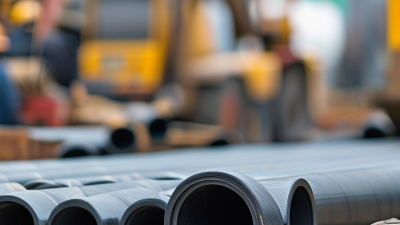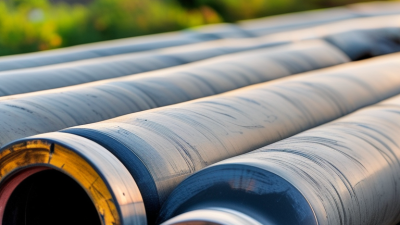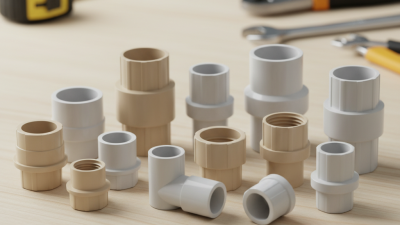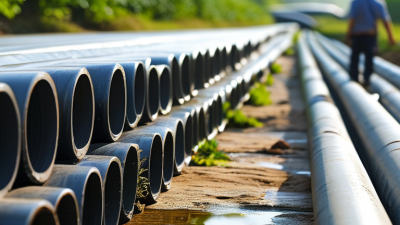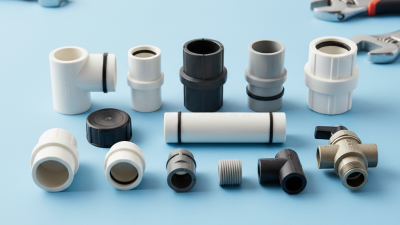
Vinidex manufacturers and supplies a broad range of products & systems to suit a range of applications.
Vinidex’s products and systems are versatile and can be used in a variety of markets and applications.
The search for the top hdpe pipe fittings suppliers begins with a changing infrastructure market. Grand View Research’s High-Density Polyethylene Pipes Market Report, 2024–2030, identifies water, wastewater, mining, and industrial applications as major growth sectors. The report also expects steady market expansion through 2030. That growth increases demand for elbows, tees, reducers, flanges, couplings, and electrofusion components that perform reliably underground.
But market size does not prove supplier quality. The best evaluation combines field experience, technical evidence, and transparent manufacturing records. ASTM F714 and ISO 4427 provide useful references for polyethylene pipe systems. AWWA C906 is also important for pressure applications in water infrastructure. Suppliers should explain resin grades, dimensional tolerances, pressure ratings, joining procedures, and batch traceability. A reliable manufacturer can identify the production batch behind a fitting delivered to a construction site.
Details matter.
A fitting may look polished under warehouse lighting yet fail through poor fusion preparation, incorrect cooling, or inconsistent dimensions. Professional buyers should compare independent test reports, factory quality controls, warranty terms, and technical support. Plastic Pipe Institute guidance can help engineers assess material behavior, design limits, and installation risks. Still, supplier rankings remain imperfect because regional certifications, delivery capacity, and application requirements vary widely. A company serving municipal water projects may not suit chemical processing or mining operations. This guide examines leading suppliers through documented capability, product breadth, compliance, delivery reliability, and practical customer experience. Claims deserve verification. Mistakes can become expensive once fittings are buried, pressurized, and difficult to replace.
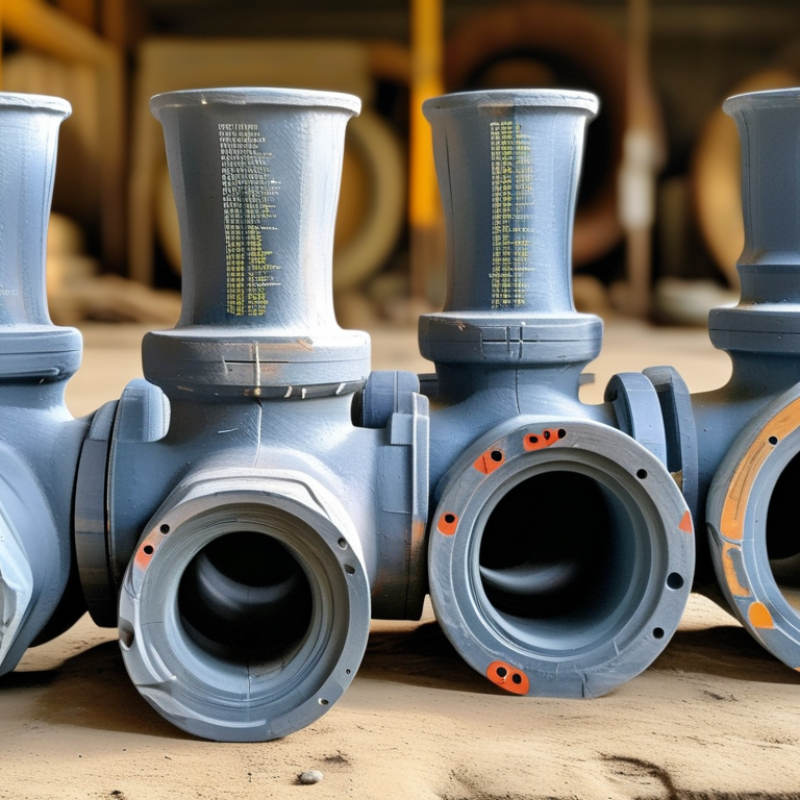
What Are HDPE Pipe Fittings and Why Do Suppliers Matter?
HDPE pipe fittings connect, redirect, reduce, or terminate polyethylene pipelines. Common examples include elbows, tees, reducers, flanges, and electrofusion couplers. These parts must match the pipe’s diameter, pressure class, and joining method. A small mismatch can create leakage, weak fusion, or costly site delays. According to ISO 4427, polyethylene piping systems require controlled dimensions and performance testing for water applications. ASTM F714 also emphasizes accurate outside-diameter measurement and pressure classification.
The supplier matters because fittings are not interchangeable commodities. A reliable supplier should provide traceable resin details, dimensional records, fusion guidance, and batch test certificates. The Plastics Pipe Institute’s PE Handbook notes that proper fusion preparation strongly affects joint reliability. Industry market research also shows continuing demand. Grand View Research reported that the global HDPE pipes market exceeded USD 20 billion in 2023, with further growth expected through 2030. That growth increases supplier choices, but not necessarily supplier quality. I have found that the cheapest quotation can hide missing documentation, inconsistent tolerances, or limited technical support. No supplier is perfect.
Tips: Ask for certificates before ordering. Confirm SDR, pressure rating, and operating temperature. Request sample measurements. Check whether technicians can support fusion training and troubleshooting. Review delivery records, not just product photos. A polished catalog proves little.
HDPE pipe fittings connect, redirect, reduce, or terminate polyethylene piping systems. The chart below compares the nominal pressure ratings associated with common SDR classes for PE100 systems at 20°C. A reliable supplier should provide fittings that match the pipe’s outside diameter, SDR, material grade, joining method, and applicable standards.
The PN values shown are nominal reference pressure ratings for PE100 piping systems carrying water at 20°C. Lower SDR values indicate thicker pipe walls and generally higher pressure ratings. Supplier quality also depends on dimensional accuracy, compatible electrofusion or butt-fusion specifications, traceability, testing documentation, and compliance with relevant standards such as ISO 4427, EN 12201, or ASTM requirements.
A top HDPE pipe fittings supplier begins with material control. Ask where the resin comes from and how each batch is traced. Reliable suppliers provide production records, dimensional reports, and pressure-test results. Their fittings should match stated standards, pressure classes, and connection methods. A clean warehouse also matters. Sealed bags, labeled cartons, and protected fusion surfaces reduce installation risks.
Practical experience separates a capable supplier from a simple distributor. Technical staff should explain butt fusion, electrofusion, flange adapters, and temperature limits clearly. They should check pipe outside diameter, wall thickness, and operating pressure before recommending a fitting. Good suppliers also support field teams with installation guides and troubleshooting advice. Their answers should remain consistent across sales, engineering, and quality departments.
Delivery performance deserves close attention. Confirm lead times, replacement procedures, inspection policies, and document availability before placing an order. Previous projects can reveal how the supplier handles damaged goods or unexpected site conditions. No catalog is perfect. A supplier may overlook a small compatibility detail, so independent verification remains wise. Clear communication, honest limitations, and evidence-based advice often indicate stronger reliability than impressive claims.
| Evaluation Dimension | Recommended Benchmark | Relevant Technical Data | How to Verify Supplier Capability |
|---|---|---|---|
| Product Standards | Products should be manufactured to recognized international standards applicable to the intended service. | Common references include ISO 4427, EN 12201, ASTM F714, and ASTM D3261, depending on the market and application. | Request current certificates, declarations of conformity, product datasheets, and standard-specific test reports. |
| Raw Material Quality | Use certified polyethylene compounds with documented grade, batch, and long-term performance data. | Typical pressure-pipe materials include PE100 and PE4710. PE100 is associated with a minimum required strength classification of 10 MPa at 20°C for the specified reference condition. | Check resin certificates, material designations, melt-flow data, carbon-black or pigment documentation, and batch traceability. |
| Fitting Range | A broad, coordinated range should cover common pipeline layouts and connection methods. | Typical products include elbows, tees, reducers, couplers, end caps, stub ends, flange adaptors, electrofusion fittings, and fabricated assemblies. | Review the dimensional catalogue, available outside diameters, pressure classes, angle options, and compatibility tables. |
| Size and SDR Coverage | The supplier should support the sizes and wall-thickness ratios required by the project. | Common HDPE systems use SDR values such as SDR 7.4, 9, 11, 13.6, 17, 21, 26, and 41; actual pressure capacity depends on material, temperature, and design code. | Compare the project specification with dimensional charts, minimum wall thickness, outside diameter, and pressure-rating tables. |
| Pressure and Temperature Performance | Published pressure ratings should clearly state design assumptions and temperature limitations. | Nominal ratings may range from approximately PN 6 to PN 25 in common systems, but the allowable pressure must be derated as operating temperature increases. | Request pressure-rating curves, temperature derating factors, design-life assumptions, and application-specific calculations. |
| Joining Compatibility | Fittings should be designed for reliable butt fusion, electrofusion, socket fusion, or mechanical connections as specified. | Butt-fusion and electrofusion require compatible pipe dimensions, controlled heating, correct alignment, and qualified installation procedures. | Verify fusion parameters, installation manuals, fusion-machine compatibility, qualification requirements, and joint inspection procedures. |
| Quality Control and Testing | Quality control should cover dimensions, appearance, material properties, pressure resistance, and production consistency. | Relevant checks may include dimensional inspection, hydrostatic pressure testing, short-term strength testing, visual inspection, and fusion-surface evaluation. | Ask for inspection plans, laboratory accreditation details, test frequencies, acceptance criteria, and independent inspection options. |
| Traceability | Every fitting should be traceable from finished product back to production batch and raw material. | Markings commonly identify size, SDR or pressure class, material designation, standard, production date, and batch or lot code. | Inspect sample markings and confirm that batch codes link to certificates, production records, and shipping documentation. |
| Customization Capability | The supplier should be able to support engineered dimensions and fabricated fittings when standard components are insufficient. | Possible services include segmented elbows, fabricated tees, nonstandard reducers, special flanges, and project-specific dimensional designs. | Review engineering drawings, calculation methods, prototype procedures, approval workflows, and inspection documentation. |
| Documentation and Technical Support | Technical information should be complete, consistent, and available before procurement and installation. | Useful documents include datasheets, dimensional drawings, installation instructions, pressure calculations, certificates, and handling guidelines. | Assess response quality, revision control, engineering support, training availability, and the clarity of technical submittals. |
| Supply Reliability | A dependable supplier should provide consistent production capacity, realistic lead times, and secure export packaging. | Performance indicators include confirmed production schedules, container or pallet planning, moisture and impact protection, and documented delivery records. | Request a production plan, inventory information, packaging specifications, quality hold procedures, and references for comparable project volumes. |
Leading HDPE pipe fittings suppliers differ most in product depth and standards control. A reliable supplier should offer tees, reducers, flanges, saddles, and electrofusion fittings matched to pipe SDR ratings. It should also provide traceability from resin batch to finished fitting. On site, installers should see clear fusion instructions, barcode records, and calibrated equipment—not only a polished catalog.
Standards reveal meaningful differences. The Plastics Pipe Institute’s PPI TR-4 report lists a 1,600 psi hydrostatic design basis at 73°F for PE4710 materials. ISO 9080 classifies PE100 through long-term hydrostatic testing, while ISO 4427 covers polyethylene water piping systems.
ASTM F714 and ASTM D3035 address additional pipe dimensions and pressure requirements. Strong suppliers explain these differences in practical terms. They should identify whether a fitting is tested for water, gas, drainage, or another approved application. A certificate without the correct temperature, SDR, or test method is incomplete.
Tips: Ask for recent third-party test reports, material traceability, fusion training records, and pressure-rating tables. Compare the same SDR and service temperature. Do not compare prices alone.
Field experience shows that a poorly matched reducer can create alignment problems during fusion. This is easy to underestimate. No supplier comparison is perfect, because local approval rules and installation skills also affect performance. PPI technical documents and ISO standards offer a sound starting point, but buyers should verify current editions before ordering.
HDPE pipe fitting suppliers must match the project, not merely offer the lowest quotation. A 2024 Grand View Research assessment estimated the global HDPE pipe market at more than USD 20 billion in 2023. That scale creates many options, but quality varies between applications. Water networks need pressure-rated fittings, while drainage, mining, and industrial systems may require different impact, chemical, or temperature performance.
Project teams should compare suppliers against ISO 4427, ASTM F714, or AWWA C906 requirements. Ask for resin grade, pressure class, dimensional records, fusion instructions, and batch traceability. The Plastics Pipe Institute’s PE guidance highlights the importance of compatible materials and controlled joining conditions. A reliable supplier should also provide factory test results, installation training, and clear replacement procedures. Small details matter, such as whether the fitting arrives protected from sunlight and contamination.
Cost is only one filter. Delivery capacity matters when a trench crew is waiting beside stored pipe. Suppliers with regional inventory may reduce downtime, while specialist manufacturers may better support unusual diameters or chemical service. I would not treat a polished catalog as proof. Audit samples, inspect markings, and request references from comparable projects. This process is imperfect. Field conditions can still expose weaknesses that paperwork misses. A practical evaluation should score technical compliance, production consistency, documentation, lead time, and after-sales support separately.
When buyers ask who the top HDPE pipe fittings suppliers are, the better question is harder: who can prove consistency? Supplier size is not enough. The 2023 WHO/UNICEF Joint Monitoring Programme reported that 2.2 billion people lacked safely managed drinking water in 2022. That figure makes component failure a procurement risk, not a minor quality issue. Start with the project specification.
Match the fitting to the pipe grade, pressure class, joining method, and operating temperature. For water systems, check ISO 4427-3 or the applicable national standard. For fusion projects, request dimensional reports, resin batch numbers, melt-flow data, and pressure-test records. Ask whether testing covers every production batch or only selected samples. Do not guess.
The U.S. EPA’s 2023 7th Drinking Water Infrastructure Needs Survey estimated $625 billion in U.S. drinking-water needs over 20 years. This scale demands disciplined supplier checks. Review factory capacity, calibration records, nonconformance procedures, and delivery history. Request independent laboratory results when project risk is high. A site audit should include warehouse storage, barcode traceability, and a random carton inspection. One uncomfortable point: a polished certificate can still hide weak production control. Verify the issuing laboratory and match its details against the actual batch. Compare warranty terms carefully, especially exclusions for fusion defects and outdoor storage. A low quote may reflect efficiency, or missing quality controls. A supplier that resists traceability deserves a lower rating.