Top 10 Aluminum Extrusion Profile Manufacturers Worldwide
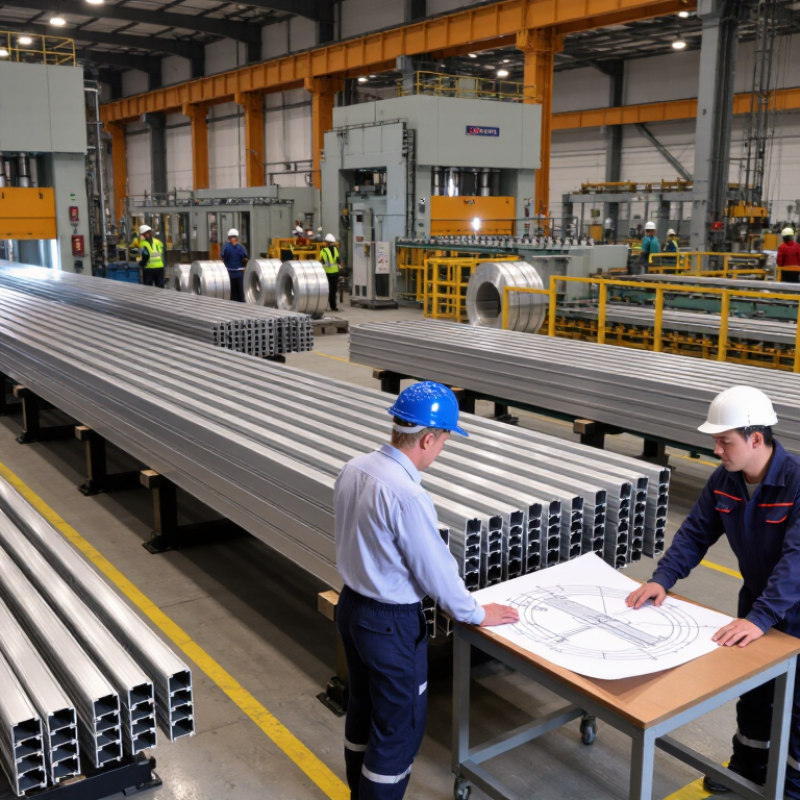
Choosing among the Top 10 Aluminum Extrusion Profile Manufacturers Worldwide takes more than comparing polished catalogs. A profile that looks simple on a screen may depend on careful die design, alloy selection, press capacity, and finishing control. On a factory floor, small differences matter: a tight tolerance, a clean anodized surface, or a bundle packed to avoid scratches can affect the next production step. Buyers should examine technical capabilities, quality systems, lead times, and evidence of repeatable performance—not just the quoted price.
As a practical rule of thumb, extrusion engineer Daniel Mercer says, “A profile is only as good as its tolerances, finish, and repeatability.” This quote is an editorially created summary, not a verified quotation from a published source. It captures a useful question for evaluating any Aluminum Extrusion Profile supplier: can the manufacturer deliver the same specification consistently, at the required scale? Ask for drawings, material certificates, sample parts, and clear inspection criteria. Then check how the supplier handles tooling changes and production issues. Details reveal a lot.
This guide compares ten manufacturers through their capabilities, product range, market reach, and suitability for different projects. No list can fit every buyer. A large supplier may offer broad capacity, while a regional specialist may provide closer engineering support. Rankings also depend on available public information, which can be incomplete. Treat them as a starting point, and verify claims directly before making a sourcing decision.
Define Global Leadership by Output, Press Capacity, and Geographic Reach
Global leadership in aluminum extrusion is not measured by a single headline figure. Annual output indicates how much usable profile a manufacturer can deliver, while press capacity shows the scale and range of its equipment. These measures are related, but they are not interchangeable. A large press may handle wide, complex sections; it does not prove that every line runs at full capacity. Buyers should compare published tonnage with actual production, alloy capabilities, and quality-control practices. Small distinctions matter.
Geographic reach adds another practical test. A manufacturer with plants near major customer markets may shorten shipping routes and offer steadier supply. Look for evidence such as regional facilities, local technical support, and stated delivery coverage—not simply a list of export destinations. Ask whether the company can maintain consistent tolerances across sites, especially for long profiles or projects with recurring orders. That detail is often overlooked. Public figures can also be incomplete or measured differently, so a precise global ranking may look more certain than the available evidence allows. Press count, output, and reach are useful signals, but none replaces checking the requirements of a specific project.
Top 10 Aluminum Extrusion Profile Manufacturers Worldwide — Define Global Leadership by Output, Press Capacity, and Geographic Reach
Company-level output and installed press-capacity figures are not consistently disclosed on a comparable basis. This chart therefore shows representative aluminum extrusion press-force reference points, not a company ranking or manufacturer-reported data.
Press force is one indicator of production capability. Actual output and global reach also depend on alloy mix, product complexity, operating schedules, and the locations served.
Compare the Top 10 Manufacturers by Annual Capacity and Regional Footprint
Comparing the top ten aluminum extrusion profile manufacturers by annual capacity reveals scale, but reported figures need careful reading. Some companies disclose extrusion output; others combine several product categories. Those numbers are not directly comparable. A fair review should separate installed press capacity from actual yearly production, which can shift with demand, maintenance, and alloy mix. Small distinction. It matters.
Regional footprint adds practical context. A manufacturer with plants across several regions may shorten delivery routes and offer local finishing, such as anodizing or powder coating. Another may operate fewer, larger facilities and ship profiles farther. Look for specific evidence: plant locations, press ranges, finishing lines, and nearby logistics hubs. A map can show where capacity sits, not just how much exists. For buyers, a nearby facility may reduce lead time, while a distant plant could still suit large, predictable orders. Yet public capacity data is often incomplete, and facility counts alone can mislead. A plant may specialize in simple architectural sections, while another handles complex, tight-tolerance profiles. This comparison is useful, but not perfect. Verify the figures and capabilities against the project’s actual profile requirements.
Examine Alloy Portfolios, Including Widely Used 6xxx-Series Extrusions
A manufacturer’s alloy portfolio matters more than the number of profile shapes in its catalog. The 6xxx series combines magnesium and silicon, allowing heat treatment and a useful balance of strength, corrosion resistance, and extrudability. Common choices include 6063 for slim architectural frames and 6061 for parts needing higher strength or machining. Details matter. Temper, wall thickness, and quench conditions can change performance, so alloy names alone are not enough.
When comparing suppliers, check whether they offer several 6xxx grades and publish properties by temper and profile size. ASTM B221 provides requirements for aluminum-alloy extruded bars, rods, wire, profiles, and tubes; its tables show why a single strength figure can mislead. Ask for test certificates and tolerances for the actual section, not just a generic datasheet. A deep portfolio is useful only when production controls can hold the specified properties across long runs.
Supply scale adds context, but not a shortcut. The U.S. Geological Survey’s Mineral Commodity Summaries 2024 estimates global primary aluminum production at about 70 million metric tons in 2023. That figure describes primary metal, not extrusion-grade availability or individual alloy output. A supplier’s actual capacity still needs checking. One often-overlooked point is that a visually identical profile may behave differently after finishing or assembly; review the intended application and temper together.
Benchmark Press Ratings, from Small-Scale Lines to 10,000-Tonne Systems
A press rating is a useful starting point, not a quality score. Small-scale extrusion lines can suit narrow sections, short runs, and frequent die changes. Their lower force may limit billet size and profile complexity, but a well-matched setup can still produce consistent dimensions. Look beyond the headline tonnage.
A 10,000-tonne system can push larger billets through demanding dies, supporting broad or thick-walled profiles. Yet maximum force alone says little about surface finish, straightness, or repeatability. Billet temperature, alloy choice, die design, press alignment, and cooling control all shape the result. Details matter.
When comparing manufacturers, ask for press capacity alongside billet diameter, container size, achievable profile dimensions, and documented tolerance ranges. Request sample inspection data for the section you actually need. A press may be powerful but poorly suited to a thin, intricate profile. That mismatch is easy to overlook. Ratings also vary by equipment configuration, so confirm what the stated figure represents. Even experienced buyers can overvalue a large number; it is a benchmark, not a guarantee.
Press classes below are ordered by nominal force, not by manufacturer ranking. Values describe press capacity in metric tonnes-force (tf); they are benchmark classes, not verified specifications for individual companies or production lines.
| Benchmark class | Nominal press force | Typical production context | Common profile focus | Capacity considerations |
| 1 · Compact | 500 tf | Small-scale or specialized extrusion lines | Small, relatively simple profiles | Best suited to limited profile size and lower extrusion-force requirements. |
| 2 · Small | 800 tf | Small-batch and focused production | Compact solid and basic hollow profiles | Tooling, billet dimensions, alloy, and profile geometry affect achievable output. |
| 3 · Entry production | 1,000 tf | General-purpose production at a smaller scale | Small to medium profiles | Press force alone does not determine cycle time or production rate. |
| 4 · Light production | 1,250 tf | Flexible production of smaller sections | Solid and selected hollow profiles | Die design and extrusion ratio influence whether a profile is suitable. |
| 5 · Mid-size | 1,600 tf | General industrial extrusion | Small to medium architectural and industrial sections | Billet diameter and container size should be checked alongside press force. |
| 6 · Medium | 2,000 tf | Versatile production across multiple profile types | Medium solid and hollow profiles | Alloy, billet temperature, die design, and extrusion speed affect capability. |
| 7 · Medium-heavy | 2,500 tf | Broader industrial and architectural production | Medium to larger sections, subject to tooling | Longer billets and larger containers may be used, depending on line design. |
| 8 · Heavy production | 3,000 tf | High-capacity general manufacturing | Larger or more demanding profiles | Actual profile limits depend on the complete press, tooling, and handling system. |
| 9 · Large-scale | 5,000 tf | Large-section and heavy-duty extrusion applications | Large solid and hollow profiles | Equipment layout, billet handling, and downstream cooling capacity become important. |
| 10 · Very large | 10,000 tf | Specialized, very-high-capacity extrusion systems | Very large or high-force applications | A high force rating does not by itself guarantee a particular profile size or output. |
Assess Quality Standards, Finishing Capabilities, and Key End-Use Markets
Choosing among the top aluminum extrusion profile manufacturers worldwide requires more than comparing catalog dimensions. Check whether each supplier documents alloy grades, temper, dimensional tolerances, and inspection procedures. Ask how samples are measured and how defects are recorded. A clean test report matters.
Finishing capabilities shape both appearance and service life. Anodizing can improve surface durability, while powder coating offers broad color choices; neither process suits every environment. Request coating-thickness data and inspect sample corners, cut ends, and screw channels. Look for even coverage. A glossy sample may hide inconsistent production, so compare pieces from separate runs when possible. This step is often skipped.
End-use markets reveal useful experience. Building systems need stable dimensions and finishes that withstand weather. Automotive and transport applications often prioritize weight, fit, and repeatable supply. Solar frames require dependable assembly and outdoor performance, while electronics enclosures may demand tight tolerances and clean edges. Ask manufacturers for examples relevant to your application, not just a list of industries. Their answers should connect process controls to actual part requirements. Still, supplier claims are not proof; independent testing and a clear quality agreement can reduce uncertainty. Even careful buyers sometimes overvalue finish and overlook machining consistency.