

How to Choose Abrasion Resistant Steel Plate
Choosing the right abrasion resistant steel plate begins with understanding the wear it must withstand. A quarry truck body faces sharp rock, while a conveyor liner may experience constant sliding friction. These conditions demand different hardness, thickness, and toughness. A plate that performs well in one application may fail quickly in another.
Experienced buyers examine the material’s hardness range, impact performance, chemical composition, and available dimensions. Hardness can reduce surface wear, but excessive hardness may complicate cutting, drilling, and welding. Toughness matters when equipment receives sudden impacts. Temperature, moisture, corrosive materials, and loading frequency also deserve attention. Small details often decide service life.
Ask for traceable test certificates and clear manufacturer data. Confirm the applicable material standard, heat number, delivery condition, and recommended fabrication procedure. Reputable suppliers should explain whether their claims come from laboratory testing, field experience, or both. Product names alone are not enough. Verify the facts.
Cost can mislead.
A cheaper plate may require frequent replacement, extra downtime, or difficult repairs. However, the hardest option is not automatically the most economical. Lifecycle cost provides a more realistic comparison. Consider installation, maintenance, transport, and production losses.
No selection method is flawless. Real operating conditions often differ from design assumptions. Dust, uneven loading, or poor welding can shorten service life unexpectedly. A practical choice combines technical evidence with feedback from operators and maintenance teams. By comparing these factors carefully, buyers can select an abrasion resistant steel plate that balances durability, fabrication needs, safety, and long-term value.
What Abrasion Resistant Steel Plate Is and How It Works
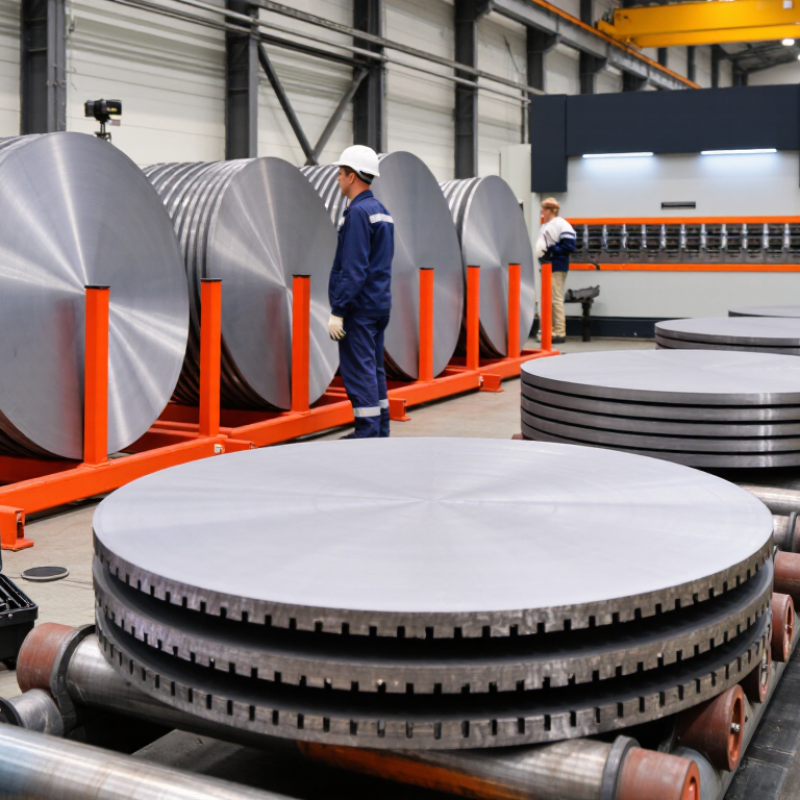
Abrasion-resistant steel plate is engineered to withstand material loss caused by rubbing, impact, or sliding particles. Its performance comes mainly from hardness and a tough supporting structure. Hard carbides or strengthened microstructures resist cutting. Toughness helps prevent sudden cracking when stones strike the surface.
In practical terms, a quarry hopper may receive sharp rock every few seconds. The plate’s top layer absorbs repeated contact while the base supports welding and structural loads. Harder is not always better. Excessive hardness can reduce formability and make repairs more demanding. This trade-off is easy to overlook during selection.
Choose the grade by examining the wear pattern, impact energy, plate thickness, and operating temperature. Sand creates different damage from large angular stone. Sliding ore may polish a surface, while falling scrap can cause dents and cracks. Review test data, but relate it to actual service conditions. Laboratory results cannot reproduce every site.
Check cutting, bending, and welding requirements before ordering. Use qualified procedures and suitable consumables. Measure plate thickness after service, not only appearance. A smooth surface may hide significant loss. In my experience, maintenance records often reveal more than a hardness number. Still, records can be incomplete, so decisions should be verified through inspection and engineering review.
How to Choose Abrasion Resistant Steel Plate - What Abrasion Resistant Steel Plate Is and How It Works
| Selection Dimension | Typical Data or Option | How It Works or Why It Matters | Recommended Use Guidance |
|---|---|---|---|
| Definition | Abrasion resistant steel plate is quenched and tempered alloy steel designed to resist material loss caused by sliding, impact, or rolling particles. | Its hardened microstructure reduces plastic deformation, scratching, gouging, and surface material removal. | Use it where ordinary structural steel wears too quickly under contact with rock, sand, ore, coal, soil, or other abrasive materials. |
| Common Hardness Class | AR400: approximately 360–440 HBW AR450: approximately 410–490 HBW AR500: approximately 450–550 HBW AR600: approximately 550–650 HBW | A higher Brinell hardness number generally improves resistance to sliding abrasion, but can reduce ease of forming, drilling, and welding. | Select the lowest hardness class that provides the required service life and impact performance. Actual ranges vary by specification and mill certificate. |
| Abrasion Type | Sliding abrasion, impact abrasion, gouging abrasion, or rolling abrasion. | Sliding abrasion removes material through rubbing particles; impact and gouging abrasion add localized deformation and cracking risks. | Prioritize hardness for severe sliding abrasion, while balancing hardness with toughness for heavy-impact and gouging conditions. |
| Impact Conditions | Low impact: fine particles and continuous flow Moderate impact: falling or moving aggregate High impact: large rocks, heavy loading, or repeated shock | Impact energy can cause cracking or spalling if the plate is too hard or lacks sufficient toughness. | For high-impact service, confirm impact toughness, plate thickness, and application-specific test requirements instead of choosing only by hardness. |
| Plate Thickness | Common industrial thickness range: about 4–100 mm, depending on the grade, product standard, and production capability. | Thickness affects structural strength, weight, heat input, forming behavior, and the achievable through-thickness hardness. | Choose thickness based on load, unsupported span, wear allowance, impact energy, and fabrication limits—not wear resistance alone. |
| Wear Allowance | A practical design allowance is often around 10–30% of the nominal plate thickness, but the correct value depends on the wear rate and replacement plan. | Additional sacrificial thickness extends operating life before the component reaches its minimum safe thickness. | Use measured field wear data whenever available. Excessive allowance increases weight, cost, and fabrication difficulty. |
| Toughness | Toughness is commonly evaluated using Charpy V-notch impact testing at a specified temperature, when required by the purchase specification. | Toughness measures the ability to absorb energy and resist brittle fracture, especially at low temperatures or under impact loading. | Specify a suitable impact test temperature and minimum absorbed energy for cold environments or high-impact equipment. |
| Weldability | Weldability depends on carbon equivalent, plate thickness, restraint, hydrogen control, preheat, interpass temperature, and heat input. | Higher alloy content and hardness can increase the risk of hydrogen-induced cracking and heat-affected-zone hardness changes. | Follow the applicable welding procedure qualification. Use low-hydrogen consumables and controlled preheating when required. |
| Forming and Bending | Cold-forming capability decreases as hardness and thickness increase. | Harder plate requires larger inside bend radii and greater forming force to avoid cracking. | Confirm the manufacturer’s minimum bend radius, bend direction, edge condition, and forming temperature before fabrication. |
| Machining and Drilling | Machining is possible but generally more demanding than machining mild structural steel. | High hardness increases cutting forces and accelerates tool wear. | Use rigid equipment, suitable carbide tooling, controlled cutting speeds, and adequate cooling according to the tool supplier’s guidance. |
| Temperature Limits | Abrasion resistant plate is commonly intended for ambient or moderately elevated temperatures; continuous high-temperature service requires special evaluation. | Heating can reduce hardness and alter the quenched-and-tempered microstructure. | Check the qualified service-temperature range before using the plate near furnaces, hot slag, or other heat sources. |
| Typical Applications | Dump bodies, truck beds, hoppers, chutes, feeders, screens, liners, buckets, crushers, conveyors, and material-handling equipment. | These components experience repeated contact with abrasive bulk materials and benefit from longer wear life. | Match the hardness, toughness, thickness, and fabrication requirements to the actual material flow and loading pattern. |
| Verification Before Purchase | Review the applicable standard, chemical composition, hardness test results, thickness, surface condition, impact data, and material test certificate. | Documented test results confirm that the delivered plate meets the selected technical requirements. | Do not compare grades by name alone. Verify the exact specification, test method, test location, tolerance, and delivery condition. |
Note: Hardness ranges and application guidance are typical industry values. Exact requirements should be confirmed against the applicable product standard, project specification, and material test certificate.