How to Choose the Best Plastic Pipework for Your Needs?
Plastic pipework has become essential in various industries due to its versatility and durability. According to a recent report by the Global Plastic Pipe Market, the industry is projected to reach USD 8 billion by 2025. This growth highlights the increasing reliance on plastic pipes for water distribution, irrigation, and construction applications. Choosing the right plastic pipework can significantly impact operational efficiency and cost management.
When selecting plastic pipework, consider the material type, application, and environmental conditions. Polyvinyl Chloride (PVC), for example, is favored for its resistance to corrosion and chemical exposure. However, it may not withstand extreme temperatures. Other options, like Polyethylene (PE), excel in flexibility and low-temperature performance. Understanding these characteristics is crucial.
Yet, the choice is often complicated by varying specifications and standards. Manufacturers may provide different grades and certifications, which can confuse decision-makers. Engaging with industry experts and reviewing independent reports helps ensure informed decisions. Ultimately, the right plastic pipework not only supports functionality but also enhances safety and compliance in any project.

Understanding the Different Types of Plastic Pipework Available
When selecting plastic pipework, understanding the various types available is crucial. The most common materials include PVC, CPVC, and PEX.
PVC (polyvinyl chloride) is renowned for its durability. It excels in water supply and drainage systems. CPVC (chlorinated polyvinyl chloride) can withstand higher temperatures, making it suitable for hot water applications. According to the Plastics Pipe Institute, over 70% of residential plumbing systems utilize some form of plastic piping, indicating its widespread acceptance.
Another popular option is PEX (cross-linked polyethylene). PEX is incredibly flexible and resistant to scale and chlorine. Its adaptability allows for easy installations in tight spaces. Reports suggest that PEX usage has surged by approximately 30% in recent years. However, while PEX offers impressive thermal efficiency, it may not be ideal for outdoor applications due to UV sensitivity. Not all plastic pipe materials are equal, and the choice greatly depends on the specific needs of the project.
Potential issues also arise when considering installation. Improper fittings can lead to leaks, costing time and money. Understanding each material's properties is essential. Missteps can result from inadequate research or hasty decisions. It’s not uncommon for installations to face unforeseen complications, highlighting the importance of choosing the right type for each situation.
Key Factors to Consider When Choosing Plastic Pipework
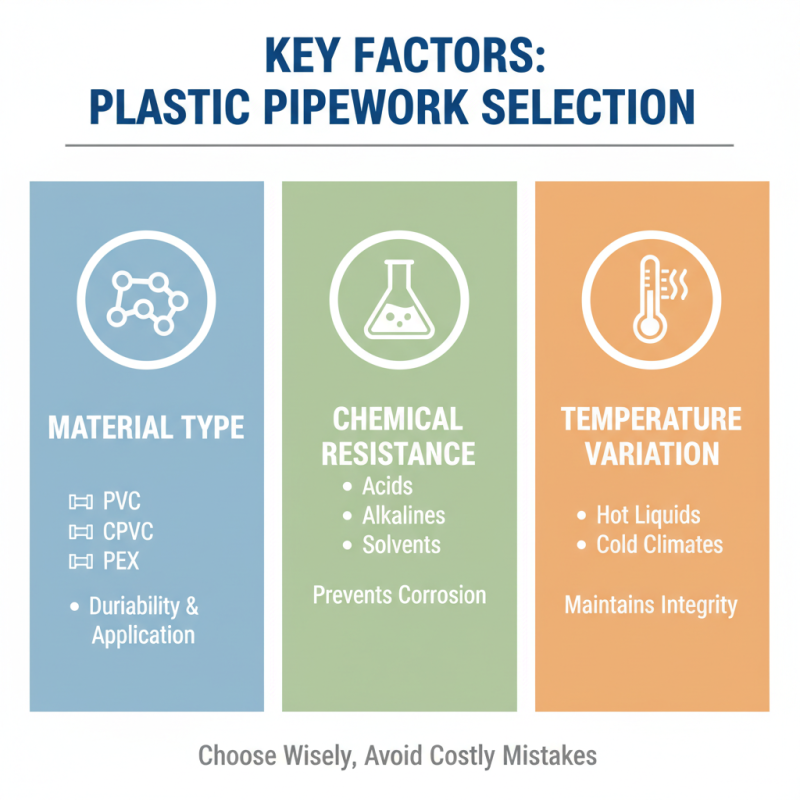
When selecting plastic pipework, several key factors impact your decision. Material plays a significant role in durability and application. Common options include PVC, CPVC, and PEX. Each material has specific strengths, like resistance to chemicals or temperature variations. Understanding these properties can prevent costly mistakes.
Another crucial aspect is the pipe's size. Proper sizing ensures optimal flow and minimizes pressure loss. Too small a diameter leads to restrictions. Conversely, an oversized pipe can be unnecessarily costly. Consider your project's specific needs and flow requirements carefully.
Finally, installation complexity shouldn't be overlooked. Some types of plastic pipework are easier to install than others. This impacts your labor costs and time. If uncertain, consulting with a professional can provide valuable insights. Reflect on your options and remember the importance of choosing wisely.
Evaluating Plastic Pipework for Pressure and Temperature Ratings
When selecting plastic pipework, pressure and temperature ratings are crucial factors. Each type of plastic has unique characteristics that determine its suitability for various applications. For example, PVC pipes perform well under many conditions, but their heat resistance is limited. In contrast, CPVC can withstand higher temperatures, making it ideal for hot water systems. Evaluating these ratings helps prevent failures due to excessive pressure or temperature.
Understanding the operating environment is essential. High-pressure situations often require pipes with robust construction. The material's thickness and the manufacturing process play significant roles here. It's essential to check the specifications from reliable sources. Documenting past applications and consulting industry professionals can lead to informed choices. However, mistakes can happen, and what works in one scenario may not succeed in another. Always consider the potential consequences of a mismatch. Regularly reviewing and updating your knowledge on material advancements is wise as well.
Evaluating Plastic Pipework for Pressure and Temperature Ratings
Assessing Chemical Compatibility for Your Plastic Pipe Needs
When selecting plastic pipework, assessing chemical compatibility is crucial. Different plastics react uniquely to various chemicals. For instance, PVC is ideal for acids, while polyethylene suits a broader range of chemicals. According to industry data, nearly 40% of pipe failures result from improper material selection. This highlights the importance of understanding your specific requirements.
Chemical exposure can lead to pipe degradation over time. For example, polypropylene is resistant to many solvents but may weaken with harsh cleaning agents. In fact, a study showed that using incompatible materials can reduce lifespan by up to 60%. This is essential information for industry professionals and DIY enthusiasts alike.
Failing to account for environmental conditions is another potential pitfall. Factors such as temperature and pressure play a role as well. For example, high temperatures can increase the effects of stress cracking in certain plastics. Choosing the right pipe involves constant evaluation and understanding the limitations of materials. Relying solely on general guidelines may not suffice; actual testing can provide a more accurate fit for your needs.
How to Choose the Best Plastic Pipework for Your Needs? - Assessing Chemical Compatibility for Your Plastic Pipe Needs
| Material Type |
Chemical Compatibility |
Temperature Range (°C) |
Pressure Rating (bar) |
Common Applications |
| PVC |
Excellent for acids, alkalis |
-15 to 60 |
10 |
Drainage, sewage |
| CPVC |
Good for chlorinated solvents |
-40 to 93 |
12.5 |
Hot water supply |
| PP |
Good for a wide range of chemicals |
-20 to 80 |
10 |
Chemical processing, automotive |
| PVDF |
Excellent for harsh chemicals |
-40 to 150 |
16 |
Pharmaceuticals, food processing |
| PE |
Good for water and mild chemicals |
-20 to 80 |
8 |
Water supply, irrigation |