2026 Best Poly Pipe Sizes for Global Buyers
Choosing the right poly pipe sizes in 2026 requires more than comparing outside diameters on a supplier chart. Global buyers must connect pipe dimensions with water flow, pressure, soil conditions, installation methods, and local project standards. A 32 mm pipe may suit a small irrigation branch, while a 160 mm line may serve a municipal water network. The application decides the size.
This guide examines common poly pipe dimensions, SDR ratings, pressure classes, wall thicknesses, and fitting compatibility. It also considers metric and inch-based measurement systems, because international purchasing often creates avoidable confusion. A pipe labeled by outside diameter may have a different internal diameter after wall thickness is considered. That difference affects flow performance.
Practical sourcing experience shows that size selection often fails at the connection point. A buyer may confirm the pipe correctly, then discover that valves, electrofusion fittings, or clamps use another standard. Small details matter. Temperature, fluid type, burial depth, and surge pressure should be checked before placing a bulk order. Supplier certificates and test records also deserve careful review.
There is no universal best size.
This introduction may not answer every project-specific question. Engineering calculations can change the recommendation, especially for long pipelines or uneven terrain. Still, a careful comparison of poly pipe sizes can reduce waste, shipping errors, pressure problems, and expensive site modifications. The goal is a reliable purchasing decision, not simply the largest or cheapest pipe available.
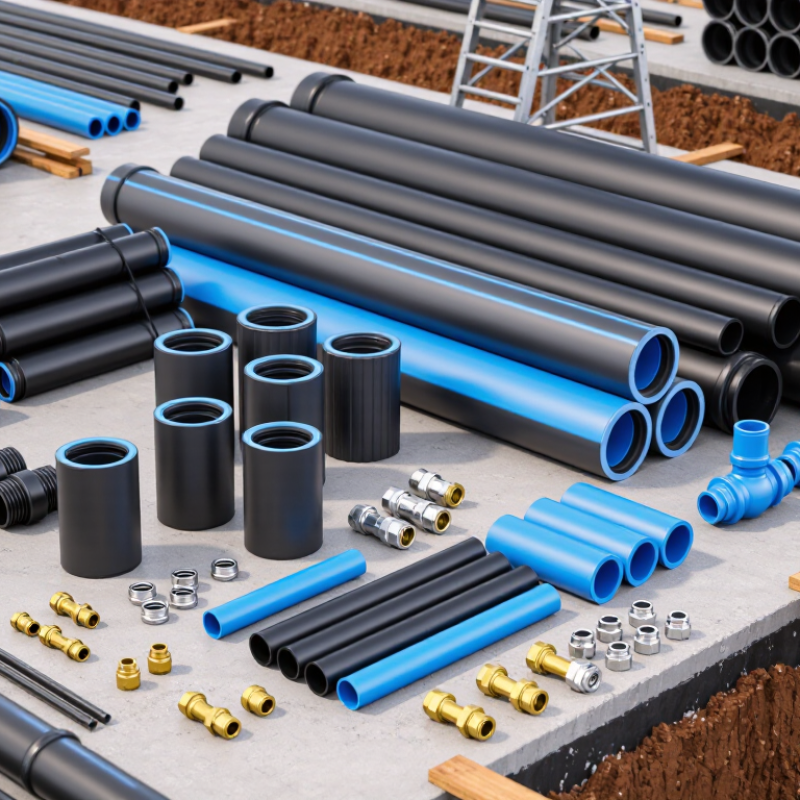
Poly Pipe Size Basics: Diameter, Wall Thickness, and SDR Ratings
2026 Best Poly Pipe Sizes for Global Buyers
Poly Pipe Size Basics: Diameter, Wall Thickness, and SDR Ratings
For global buyers, pipe size starts with outside diameter, not the water opening. A 110 mm pipe measures about 110 mm across its outer surface. Its actual inside diameter changes with wall thickness. That difference affects flow, pump energy, and connection fit. Measure the drawing, not only the product label. Nominal size can vary between standards and markets.
Wall thickness is commonly linked to the SDR rating. SDR means outside diameter divided by minimum wall thickness. A lower SDR indicates a thicker wall and usually higher pressure resistance. For example, an SDR 11 pipe has a wall near one-eleventh of its diameter. Pressure ratings still depend on material grade, temperature, and service conditions. Do not compare SDR numbers alone. It is an easy mistake.
A practical selection begins with flow demand, pressure, burial depth, soil movement, and installation temperature. For a small irrigation branch, 25 or 32 mm may reduce cost and remain easy to handle. Main lines often need 63, 90, or 110 mm, depending on demand and allowable velocity.
I once focused too heavily on purchase price; the smaller pipe created excessive pressure loss. That lesson remains useful. Check fusion compatibility, tolerances, and local standards before ordering. Request dimensional reports and pressure data from the manufacturer. Good paperwork prevents expensive surprises.
How to Match Poly Pipe Sizes to Flow Rate and Pressure Needs
Matching poly pipe size to flow rate and pressure requires more than reading the outside diameter. Pipe inside diameter changes with SDR, wall thickness, and temperature. A 63 mm pipe with SDR11 has an approximate 51.5 mm internal diameter. At 1.5 m/s, it carries about 3.1 L/s. This is a practical starting point, not a final design value.
The Plastic Pipe Institute’s PE Handbook commonly uses a Hazen-Williams coefficient of 150 for smooth polyethylene pipe. However, fittings, valves, elevation, and aging can increase real pressure loss. Keep some margin. A 90 mm SDR17 pipe has an internal diameter near 79 mm and carries roughly 7.4 L/s at the same velocity. That larger bore may reduce pumping energy, even when its pressure rating differs.
Pressure selection depends on SDR, material grade, temperature, and surge conditions. PPI data lists PE4710 pipe with a 160 psi pressure rating for SDR11 at standard reference conditions. ISO 4427 also classifies polyethylene systems by dimensions and pressure categories, but global buyers must confirm the local test requirements. Water hammer is often underestimated. It can damage a correctly sized pipe. Field data, including actual pump cycles, elevation changes, and peak demand, should guide the final size. My practical mistake would be sizing only for average flow. Peak flow decides whether the system performs reliably.
2026 Best Poly Pipe Sizes for Global Buyers - How to Match Poly Pipe Sizes to Flow Rate and Pressure Needs
Nominal Size
(DN) |
Outside Diameter
(mm) |
PE100 SDR11
Higher-Pressure Selection |
PE100 SDR17
Lower-Pressure / Larger-Bore Selection |
Typical Selection Guidance |
Approx. Inside Diameter
(mm) |
Nominal Pressure
at 20°C |
Flow at 1.5 m/s
(L/min) |
Approx. Inside Diameter
(mm) |
Nominal Pressure
at 20°C |
Flow at 1.5 m/s
(L/min) |
| DN25 |
25 |
20.5 |
PN16 |
30 |
22.1 |
PN10 |
34 |
Small branches, equipment connections and low-demand service lines. |
| DN32 |
32 |
26.2 |
PN16 |
48 |
28.2 |
PN10 |
56 |
Domestic, irrigation and light commercial distribution. |
| DN40 |
40 |
32.7 |
PN16 |
76 |
35.3 |
PN10 |
88 |
Small irrigation zones and short commercial branch lines. |
| DN50 |
50 |
40.9 |
PN16 |
118 |
44.1 |
PN10 |
138 |
Residential mains, irrigation headers and compact process-water systems. |
| DN63 |
63 |
51.5 |
PN16 |
188 |
55.6 |
PN10 |
219 |
Medium irrigation laterals and general water-distribution mains. |
| DN75 |
75 |
61.4 |
PN16 |
266 |
66.2 |
PN10 |
310 |
Higher-demand irrigation and small municipal distribution networks. |
| DN90 |
90 |
73.6 |
PN16 |
383 |
79.4 |
PN10 |
446 |
Medium-capacity water mains and industrial utility services. |
| DN110 |
110 |
90.0 |
PN16 |
573 |
97.1 |
PN10 |
666 |
Municipal branches, fire-water distribution and larger irrigation mains. |
| DN125 |
125 |
102.3 |
PN16 |
739 |
110.3 |
PN10 |
860 |
Medium-to-large municipal or industrial water-transfer lines. |
| DN160 |
160 |
130.9 |
PN16 |
1,212 |
141.2 |
PN10 |
1,408 |
Large irrigation headers, process-water mains and municipal trunk sections. |
| DN200 |
200 |
163.6 |
PN16 |
1,893 |
176.5 |
PN10 |
2,201 |
High-flow trunk mains where installation space and pressure requirements are important. |
| DN250 |
250 |
204.5 |
PN16 |
2,957 |
220.6 |
PN10 |
3,439 |
Large municipal, mining, irrigation and industrial transfer systems. |
| DN315 |
315 |
257.7 |
PN16 |
4,695 |
277.9 |
PN10 |
5,459 |
Large trunk mains and long-distance bulk-water conveyance. |
Calculation basis: Flow figures are theoretical screening values calculated at an average water velocity of 1.5 m/s using the approximate internal diameter. Actual delivered flow must be checked against pipe length, fittings, elevation, allowable head loss, surge pressure and pump performance.
Pressure basis: PN16 for PE100 SDR11 and PN10 for PE100 SDR17 are commonly used nominal classifications at 20°C under applicable PE piping standards. Confirm the exact standard, design coefficient, service temperature, fluid, jointing method and pressure-temperature derating requirements before purchasing.
Size matching rule: Select the pressure class first, then verify that the internal diameter provides the required flow with acceptable friction loss and water-hammer control.
A Step-by-Step Guide to Selecting the Right Poly Pipe Size
Selecting the right poly pipe size starts with the job, not the catalog. Define the required flow, operating pressure, pipe length, temperature, and fluid type. For irrigation, remember the UN World Water Development Report 2024 estimates agriculture uses about 70% of global freshwater withdrawals. Small sizing errors can affect large systems.
Measure the required flow in litres per second or gallons per minute. Then calculate friction loss using a recognized method, such as Hazen-Williams or Darcy-Weisbach. The Plastics Pipe Institute’s Handbook of Polyethylene Pipe commonly uses a Hazen-Williams coefficient near 150 for smooth polyethylene surfaces. However, fittings, valves, elevation, and aging can change the result. I would not size from flow alone.
Compare outside diameter, wall thickness, and SDR. ISO 4427-2:2019 provides key dimensional and pressure guidance for polyethylene water pipes. A lower SDR usually means a thicker wall and higher pressure capability, but it may reduce internal flow area. Check the actual inside diameter. Do not guess.
Test the numbers.
Global buyers should also verify metric or imperial dimensions, local pressure classes, temperature derating, joining methods, and national approvals. A spreadsheet may show an efficient size, yet a site survey can reveal uneven ground or seasonal demand. That is where the first calculation may need revision. For critical systems, have a qualified engineer review surge pressure and installation conditions before ordering.
2026 Best Poly Pipe Sizes for Global Buyers
A step-by-step guide to selecting the right poly pipe size
The chart compares common metric polyethylene pipe outside diameters with their
approximate internal diameters for SDR 11 pipe. Internal diameter is calculated
from the nominal outside diameter using the SDR 11 wall-thickness relationship.
For smaller service connections, 20–32 mm sizes are commonly considered.
40–63 mm sizes suit many residential, irrigation, and light commercial systems,
while 75–160 mm sizes are typically selected for higher flow requirements.
Always confirm pressure rating, flow demand, installation conditions, and local
standards before specifying a pipe.
Reference basis: common metric PE pipe outside diameters used in ISO 4427 and
EN 12201 systems. Internal diameters are approximate and may vary with product
tolerances and the selected SDR class.