Who Is the Best Custom Reflective Vest Supplier in China?
Choosing the best Custom Reflective Vest supplier in China takes more than comparing prices. A vest may look bright in a product photo, yet feel stiff at the shoulders or lose its neat finish after repeated washing. Buyers should examine fabric weight, reflective-tape placement, seam quality, sizing consistency, and sample-to-order accuracy. Ask for a pre-production sample. Check it under headlights, then inspect the stitching and closures in daylight. Small details matter.
As a practical sourcing principle, reflective-apparel specialist Lin Wei says, “A reliable vest is proven in the details: visibility, fit, and consistent production.” Treat that as a buyer’s checklist, not a substitute for verified product documentation. Confirm the supplier’s testing records, production capacity, customization process, and quality checks. Request clear answers about logo placement, color matching, packaging, and lead times. A confident sales reply is useful; documented evidence is better.
This guide will compare suppliers by the things procurement teams can actually verify: product range, customization flexibility, communication, sampling, and quality control. It will also consider where suppliers fall short. A polished sample does not guarantee a consistent bulk order. That distinction is easy to overlook. The strongest choice is not automatically the cheapest or the largest factory. It is the supplier that can explain its process, support claims with records, and deliver the agreed specification reliably.
How Worksite Risks Determine Reflective Vest Design and Visibility Needs
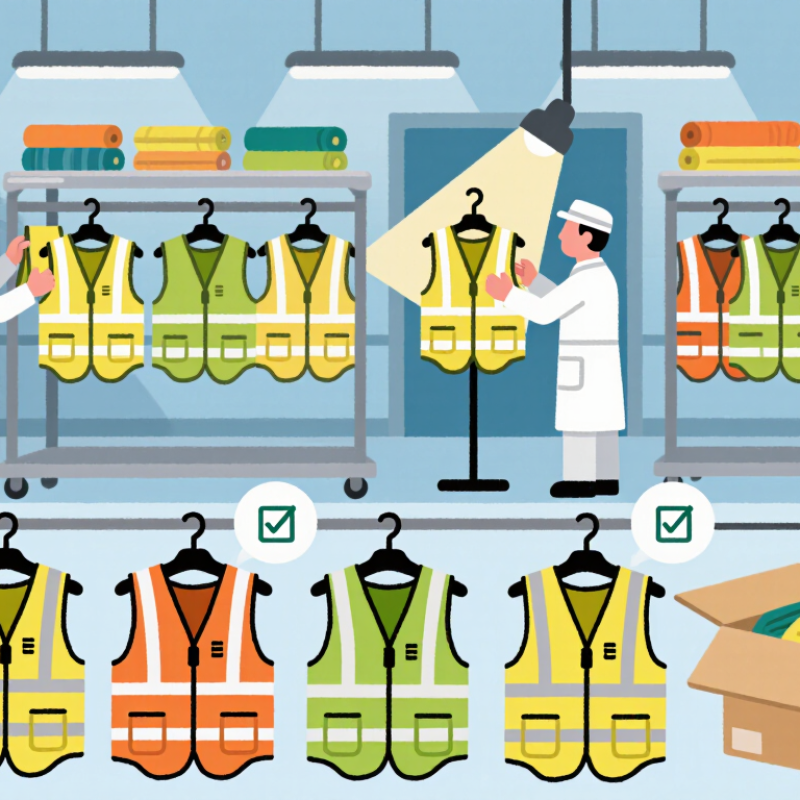
Reflective vest design should begin with the worksite, not a catalog color. A road crew beside fast traffic needs stronger contrast and wider reflective bands than staff moving through a brightly lit warehouse. At dawn, dusk, or in rain, background colors can swallow a vest that looked vivid indoors. Check approach distance, vehicle speed, lighting, and viewing angles. Small details matter. A worker bending to lift a crate may hide front panels beneath a tool belt, while a harness can cover shoulder tape. These issues are easy to miss during a desk review.
Fluorescent fabric supports daytime visibility, while retroreflective material helps in low light; neither addresses every risk alone. For night work, test samples under headlights from several directions, including side approaches. In hot, humid areas, breathable mesh may encourage longer wear, but loose fabric can snag near moving equipment. Fit matters too: check coverage over winter layers without restricting movement. Ask suppliers for material specifications and wash-care guidance, then inspect samples at the actual site. One limitation deserves attention: visibility cannot replace separation, lighting, or safe work procedures. Bright color can seem reassuring, yet grime, damaged tape, and poor fit may quietly reduce performance. That assumption is worth revisiting.
What EN ISO 20471 Requires: Class 2 Needs 0.50 m² Background and 0.13 m² Reflective Material
For a Class 2 high-visibility vest, EN ISO 20471 requires at least 0.50 m² of fluorescent background material and 0.13 m² of retroreflective material. These are minimum areas on the garment, not estimates based on a fabric roll. The fluorescent fabric helps the wearer stand out in daylight, while reflective bands return light in darker conditions. Both matter.
When assessing a custom vest supplier in China, ask how these areas are measured on the finished garment. Pocket flaps, mesh panels, seams, and openings can affect the usable area. A vest that meets the figures in one size may not retain the same proportions in every size. Request test documentation for the exact design and size range, and check that the reflective bands are positioned as required. Details count.
A sample is useful. Lay it flat and compare its construction with the technical file; then confirm which size was tested. Do not rely on a product photo or a fabric specification alone. I have seen small design changes create avoidable questions during review. One caveat: area figures are only part of the standard, so confirm the applicable edition and full garment requirements with a qualified testing body.
How Fabric, Reflective Tape, and Test Reports Reveal Product Quality
When comparing custom reflective vest suppliers in China, start with the fabric, not the product photo. A lightweight mesh vest should feel breathable and hold its shape after handling. Check the fabric weight, seam finish, and size consistency across several samples. A soft hand feel is useful, but it does not prove durability. Small details matter.
Reflective tape deserves a close look. Ask how wide it is, where it is placed, and whether its performance has been tested after washing. Flex a sample gently and inspect the edges for lifting or cracked coating. Tape can look bright under a showroom lamp yet perform differently in real conditions. I have learned not to judge from one sample alone.
Test reports help connect claims with evidence. Check that the report names the tested material or vest construction, gives a test date, and comes from a qualified testing laboratory. Compare those details with the quotation and production sample. If they do not match, ask for clarification before ordering. A neat report can still leave questions. Reliable suppliers answer specific questions clearly and are willing to explain limits, not just show certificates.
How to Compare Chinese Suppliers on Customization, MOQ, Lead Time, and Compliance
Choosing a custom reflective vest supplier in China requires more than comparing unit prices. The U.S. Bureau of Labor Statistics reported 1,942 fatal work injuries from transportation incidents in 2023. That figure comes from its Census of Fatal Occupational Injuries. High-visibility clothing is only one part of workplace safety, but fit and visibility matter. Ask suppliers how they handle fabric color, reflective tape layout, pocket placement, sizing, and logo application. Request a physical sample. Check the stitching and tape alignment under bright light.
Compare minimum order quantities by color and size, not just total units. A low MOQ may still exclude mixed sizes or custom colors. Get lead times in writing, including sample approval, production, inspection, and shipping. Confirm when the clock starts. It can be later than expected. For repeat orders, ask how fabric and color consistency are checked between batches.
For compliance, name the required standard in the purchase specification, such as ANSI/ISEA 107 or ISO 20471, based on the intended market and use. Ask for current test reports that identify the garment materials and design tested. Verify the laboratory and report scope; a generic certificate may not cover your custom version. Still, paperwork can look tidy while production varies. An independent pre-shipment inspection can help catch that gap.
Who Is the Best Custom Reflective Vest Supplier in China?
Compare suppliers on customization, MOQ, lead time, and compliance using a practical 100-point evaluation rubric.
How to use it: These are suggested evaluation weights, not measured supplier results. Score each supplier against the same criteria, verify certificates and test reports for the exact vest and target market, and confirm MOQ and production lead time in writing.
Who Is the Best Custom Reflective Vest Supplier in China? A Practical Evaluation Framework
Who Is the Best Custom Reflective Vest Supplier in China?
Who Is the Best Custom Reflective Vest Supplier in China? A Practical Evaluation Framework
The best supplier is not simply the one offering the lowest quote. Compare fabric weight, vest construction, reflective tape placement, size range, and available color options. Ask for a sample in your intended design. Check the seams, closures, and tape edges by hand. Small defects matter.
Request written specifications for materials, tolerances, customization, and inspection procedures. Then compare those details with the sample. If visibility performance matters for your use, ask for relevant test reports and confirm what product and test conditions they cover. Documents should match the item being quoted. A sample helps, but it does not guarantee every production unit will be identical.
Communication is part of the evaluation. Give each supplier the same artwork, quantities, size breakdown, and delivery expectations, then compare how clearly they respond. Ask how changes are approved and how defects are recorded. Clarify minimum order quantities, sample charges, production timelines, and shipping terms in writing. Visit or arrange an independent assessment when the order justifies it. That adds cost. Still, email promises alone can leave gaps, and no checklist catches everything.