
7 Best Calcium Carbonate Stone Suppliers for Global Buyers

Global buyers sourcing Calcium Carbonate Stone need more than an attractive sample. They need consistent mineral composition, dependable sizing, careful packing, and shipping schedules that hold up under pressure. A pale limestone block may look uniform at the quarry gate, yet reveal uneven color after cutting. Small differences matter.

The U.S. Geological Survey’s Mineral Commodity Summaries 2024 estimated U.S. crushed-stone production at about 1.5 billion metric tons in 2023, with limestone and dolomite representing roughly 70% of output. The figures show the scale of the supply chain, but not the quality of any individual shipment. USGS mineral commodity specialist Jason Christopher Willett’s reporting offers a useful reminder: production data describe the market, not a supplier’s performance. That distinction deserves attention.

This guide reviews seven Calcium Carbonate Stone suppliers for global buyers. It considers product range, documented quality controls, export readiness, and communication before an order is placed. Ask for recent test results, quarry details, and packing photographs. Check how the supplier handles shade variation and breakage claims. A polished sample can still disappoint. No supplier is the right fit for every application, and published claims should be verified directly. The shortlist is a starting point, not a substitute for due diligence.
7 Best Calcium Carbonate Stone Suppliers for Global Buyers

Calcite Fundamentals: Mohs Hardness 3 and Density Near 2.71 g/cm³

Calcite’s Mohs hardness is 3, and its typical density is about 2.71 g/cm³. These figures matter when buyers compare calcium carbonate stone for grinding, handling, or architectural use. A steel tool can scratch calcite; rough loading can also leave visible marks. Keep that in mind when specifying chip size and packaging. A number on a data sheet is not the whole story.

The Handbook of Mineralogy lists calcite’s specific gravity at approximately 2.71, while the USGS Mineral Commodity Summaries 2025 estimates U.S. crushed-stone output at about 1.5 billion short tons in 2024. That broad total includes many rock types, not just calcite, but it shows the scale of aggregate supply. For procurement, ask for a current analysis of calcium carbonate content, moisture, particle size, and impurities. Requesting a representative sample helps. So does checking whether the reported density describes pure mineral or bulk stone, which includes pores and gaps. That distinction is easy to miss. One honest limitation: natural deposits vary, and a neat specification cannot erase every variation between quarry faces.

Ground vs. Precipitated Calcium Carbonate: Grades and Buyer Specifications

Ground calcium carbonate (GCC) is made by grinding natural limestone. Its particle size, brightness, and mineral purity can vary with the deposit and milling process. Precipitated calcium carbonate (PCC) is produced through a controlled chemical process, which can offer more consistent particle shapes and sizes. Neither option is automatically better; the right grade depends on the product and manufacturing conditions.

Buyer specifications should go beyond “fine” or “white.” Check median particle size (D50), maximum particle size, moisture, calcium carbonate content, and brightness, including the test method used. For paper, plastics, or coatings, surface treatment, oil absorption, and bulk density can also affect performance. Ask suppliers for a recent certificate of analysis and stated tolerances. A number without a test method can be misleading.

Tips: Request a representative sample and test it in your actual process. Confirm packaging, batch consistency, and shipping requirements before ordering. One easy-to-miss detail is moisture: even a small difference may affect feeding or dispersion. Compare results, not just quoted specifications; supplier data may not match your own test setup exactly.

7 Best Calcium Carbonate Stone Suppliers for Global Buyers - Ground vs. Precipitated Calcium Carbonate: Grades and Buyer Specifications

Supplier Type Material / Process Indicative Grade Range Common Applications Buyer Specifications to Confirm Best Fit for Global Buyers
Integrated quarry and GCC producer Ground calcium carbonate (GCC), produced by crushing, grinding, and classifying limestone or marble Standard to fine grades; particle size commonly selected by application, with many commercial grades in the approximate 2–20 µm median-particle-size range Paint, plastics, rubber, adhesives, construction materials Mineral source; CaCO₃ content; whiteness or brightness test method; particle-size distribution; moisture; residue; packaging and shipment capacity Buyers seeking dependable bulk supply, quarry-to-port traceability, and a range of general-purpose grades
High-brightness marble GCC producer GCC milled from selected, naturally bright marble or limestone feedstock Fine and ultrafine grades; brightness and color depend on the deposit and processing controls Paper, paints, sealants, plastics, and products where color consistency matters Whiteness/brightness value and test method; iron and other coloring impurities; particle-size distribution; lot-to-lot color variation; food-contact or other required compliance documentation Applications that need a bright mineral filler and consistent appearance across production lots
Ultrafine GCC specialist Mechanically ground and air-classified calcium carbonate; may be supplied untreated or surface-treated Fine to ultrafine grades; submicron and low-micron grades are available from some producers, subject to grade and test method Polymer compounding, fine coatings, inks, rubber, and specialty compounds D10, D50, and D97 values; measurement method; top-cut or coarse-particle content; specific surface area if relevant; dispersibility; treatment chemistry where applicable Buyers requiring tighter particle-size control than general-purpose ground grades typically provide
Surface-treated GCC producer GCC treated with a surface agent, commonly to improve compatibility or dispersion in a particular formulation Coated grades offered in several particle-size ranges; treatment and performance are grade-specific Polyolefins, PVC, masterbatch, sealants, and selected rubber compounds Coating or treatment type; treatment level; moisture; particle-size distribution; dispersion performance; compatibility with the buyer’s polymer or binder system Processors looking to improve filler dispersion or tailor filler compatibility; trials are recommended before scale-up
PCC process manufacturer Precipitated calcium carbonate (PCC), chemically produced by carbonation of hydrated lime; crystal shape and size can be controlled by process conditions Engineered grades with controlled morphology and particle size; exact specifications vary by product and intended use Paper, plastics, coatings, rubber, pharmaceuticals, and other specialty uses, subject to applicable grade approvals Crystal morphology; particle-size distribution; brightness; surface area; bulk density; moisture; residual alkalinity; applicable regulatory and safety documentation Buyers seeking a designed particle structure or properties that differ from conventional mined GCC
Paper-grade PCC supplier PCC grades engineered for paper filling or coating, including different crystal forms and particle-size profiles Application-specific grades; specifications are commonly agreed around paper-machine performance rather than a single universal size range Paper filling and coating, where permitted by the paper formulation and process Crystal form; particle-size distribution; brightness; slurry solids and viscosity; retention and drainage behavior; compatibility with the paper process Paper manufacturers needing a grade selected for a defined furnish, coating system, or machine-performance target
Regional mineral-filler distributor or converter Locally stocked, screened, repacked, or converted GCC and, where available, PCC from multiple production sources Usually a portfolio of standard grades; availability, origin, and packaging can vary by market Construction, paints, plastics, adhesives, and smaller-volume industrial uses Original producer and country of origin; current technical data sheet and certificate of analysis; batch traceability; storage conditions; packaging; lead time; import documentation Buyers prioritizing local inventory, smaller order quantities, or shorter replenishment times

Buyer note: The entries describe supplier categories, not named companies or ranked recommendations. Grade ranges are indicative rather than universal limits: specifications differ by producer, mineral source, process, and test method. Before ordering, request a current technical data sheet and lot-specific certificate of analysis, agree on test methods and tolerances, and validate the material in the intended process.

Supplier Evaluation: Compare Purity, Whiteness, Particle Size, and Certifications

For global buyers, compare calcium carbonate suppliers using matched test methods, not sales-sheet adjectives. Request purity results, preferably with the test method and batch number shown. Check whiteness in the scale your application requires; a bright sample can still perform poorly in coatings or plastics. Particle size needs equal scrutiny. Ask for D50, D97, and the measurement technique, then compare them with your process requirements. Small differences can affect surface finish, dispersion, and equipment wear. Short trial runs matter.

The USGS Mineral Commodity Summaries 2025 estimates U.S. crushed-stone output at about 1.5 billion metric tons in 2024, with limestone and dolomite as major components. This signals a large mineral supply base, not uniform product quality. For a practical comparison, request recent certificates of analysis and independent laboratory results. Check whether particle-size testing follows a stated method, such as ISO 787-7, and whether the supplier’s quality system is certified to ISO 9001. Ask for mine-origin details, moisture limits, and packaging specifications too. A certificate can look complete yet omit the test conditions. That is easy to miss. Compare samples from the same grade, and document any mismatch before approving a shipment.

Calcium Carbonate Supplier Evaluation: Typical Screening Bands

Compare product specifications alongside particle size and certification evidence. These broad, illustrative screening bands are not supplier-specific or universal; confirm each grade’s test method and current certificate scope.

What to verify: Request a certificate of analysis for CaCO₃ content and whiteness, including the test methods used. Specify particle size by a measurable parameter such as D50 (µm), and verify that certifications are valid and cover the relevant product and manufacturing site.

Seven Global Calcium Carbonate Stone Suppliers: Products and Market Reach

Global buyers can compare seven supplier bases by origin and product fit. Chinese producers often offer fine ground calcium carbonate and coated grades for plastics, paper, and sealants. Indian suppliers serve regional construction and industrial demand with ground powders and marble chips. Turkish quarries provide white calcite and marble-derived stone for export. Vietnamese sources ship limestone-based powders and aggregate across Asian markets. Spanish producers supply European buyers with ground grades and decorative stone. Egyptian suppliers reach markets in Africa and the Middle East. U.S. suppliers offer ground products close to large North American customers. Availability varies by quarry.

Scale matters, but product specifications matter more. The USGS Mineral Commodity Summaries 2025 estimates U.S. crushed-stone production at about 1.5 billion metric tons in 2024; limestone and dolomite make up a major share. This is feedstock context, not a calcium carbonate sales figure.

Not interchangeable.

Buyers should request calcium carbonate content, brightness, moisture, particle-size distribution, coating details, and recent batch certificates. Check the sieve. A fine white sample can still perform poorly in a specific coating or polymer. Freight, port access, and consistent grading also shape a supplier’s practical market reach. I would not select on price alone; that shortcut can become expensive.

International Procurement: Verify Packaging, Incoterms, and Compliance Documents

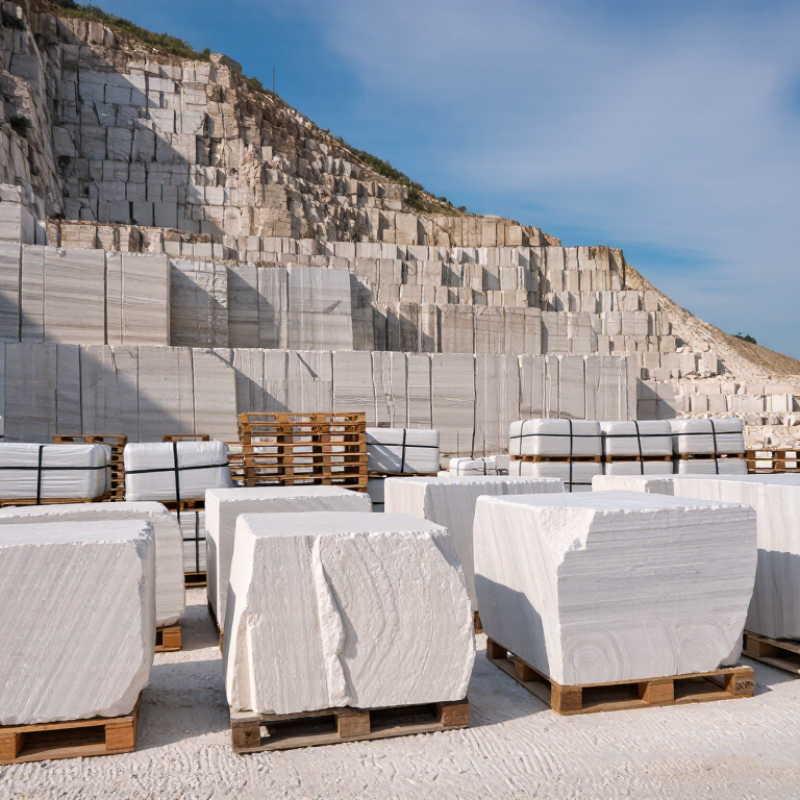
When comparing calcium carbonate stone suppliers, confirm the exact product form, grade, and intended use before discussing price. “Stone” may mean blocks, crushed material, or processed powder, and packaging needs differ. Ask for a recent specification sheet showing particle size or dimensions, moisture limits, and test methods. Small details matter.

Packaging should match the route and cargo conditions. For powder, request sealed, moisture-resistant bags or lined bulk packaging, plus clear net-weight labels. For larger pieces, check pallet strength, edge protection, and how loads are secured inside the container. Ask for loading photos and packaging dimensions; they can reveal problems that a quotation misses. I would not assume a standard bag is suitable for every port or season.

Set the Incoterm and named place precisely, using the agreed Incoterms edition. Clarify who arranges freight, insurance, export clearance, and unloading, rather than relying on a short code alone. Before payment or shipment, verify the commercial invoice, packing list, certificate of analysis, safety data sheet, and any origin or inspection documents required by the destination. Requirements vary by market, so confirm them with your broker or relevant authority. Paperwork can still be incomplete. Check that product descriptions, weights, and lot numbers match across every document.