

2026 Best Plastic Pipe Types for Global Buyers?
Choosing the best plastic pipe for global projects in 2026 requires more than comparing price, color, or wall thickness. Buyers must match the material with pressure, temperature, soil movement, fluid chemistry, and installation conditions. A pipe that performs well beneath a European road may fail early in tropical heat or unstable ground. That difference matters.
Tony Radoszewski, former president and CEO of the Plastics Pipe Institute, once said, “Plastic pipe is an engineered system, not simply a product selected from a catalog.” His point remains practical. Polyethylene, PVC, CPVC, polypropylene, and multilayer designs each offer distinct strengths. PE suits flexible underground networks and trenchless installation. PVC often provides cost-efficient water distribution. CPVC handles selected hot-water applications. PP may serve demanding chemical or industrial environments.
No ranking is universal. That is the difficult part. Global buyers should examine certified pressure ratings, joining methods, dimensional standards, traceability, and supplier testing records. They should also ask how the plastic pipe will be transported, stored, installed, inspected, and repaired. Small details matter. A scratched pipe, poorly prepared joint, or untrained installer can weaken an otherwise excellent system.
This 2026 guide compares leading plastic pipe types through a buyer’s lens. It considers service life, total ownership cost, sustainability claims, regional availability, and technical support. Some conclusions may remain imperfect because local standards and project data differ. That uncertainty deserves attention, not convenient simplification. The strongest purchasing decision is usually the one supported by verified specifications, experienced engineering review, and realistic field conditions.
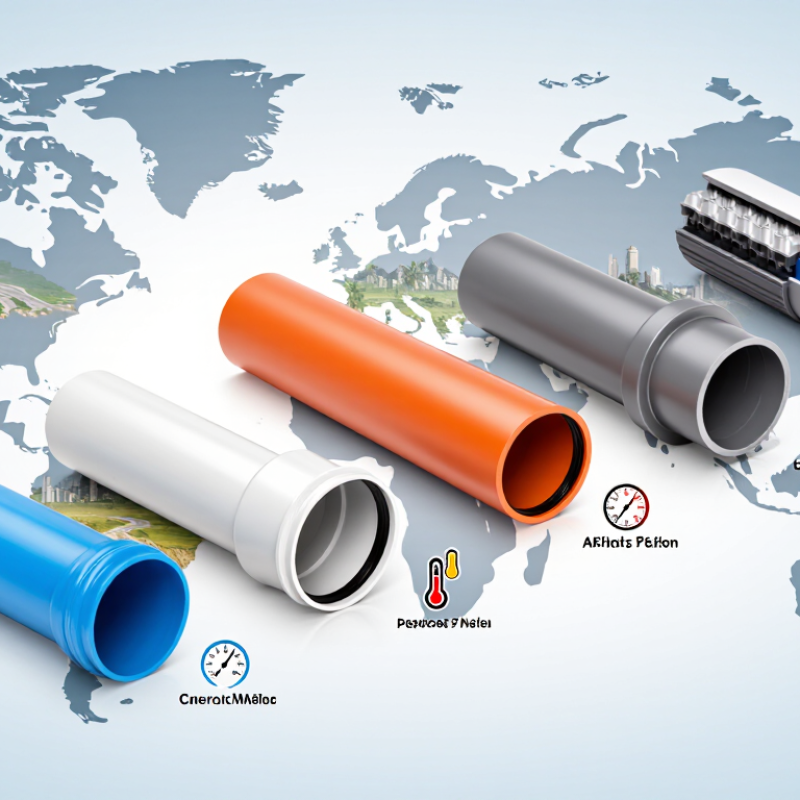
Plastic Pipe Basics: Materials, Structures, and Key Performance Traits
Plastic pipes are selected by service conditions, not appearance. Common materials include PVC, PE, PP-R, and ABS. PVC offers stiffness and efficient flow for drainage and water systems. PE bends around gentle curves and tolerates ground movement. PP-R handles warm water and repeated thermal cycling. ABS can suit certain indoor drainage applications, where local codes permit it.
Structure matters as much as material. Solid-wall pipes provide predictable pressure performance. Corrugated pipes improve flexibility and reduce weight, but their internal ribs may increase flow resistance. Reinforced or multilayer designs add strength, barrier protection, or temperature stability. During project reviews, I check wall thickness, pressure class, joint design, and installation depth. A strong pipe can still fail after poor bedding.
Performance data should match real service. Review temperature range, chemical compatibility, impact resistance, UV exposure, and expected operating pressure. For buried systems, inspect soil conditions and possible traffic loads. For exposed lines, verify stabilizers and protective measures. Independent test reports and applicable international standards improve purchasing confidence. Yet certificates need careful reading. They may cover a sample, not every production batch. Small details matter. A specification can look complete while missing surge pressure, fitting compatibility, or long-term creep. Buyers should request traceability, dimensional checks, and test results before shipment.
2026 Best Plastic Pipe Types for Global Buyers? - Plastic Pipe Basics: Materials, Structures, and Key Performance Traits
| Pipe Type | Primary Material | Common Structure | Typical Temperature Capability | Key Performance Traits | Typical Applications | Main Limitations | Common International Standards |
|---|---|---|---|---|---|---|---|
| PVC-U Pressure Pipe | Unplasticized polyvinyl chloride | Homogeneous solid-wall pipe; socket or solvent-welded joints | Usually suitable for continuous service up to approximately 45–60°C, depending on pressure rating and design | Lightweight, rigid, corrosion-resistant, smooth internal surface, low friction, good dimensional stability | Potable-water distribution, irrigation, drainage, industrial fluids, swimming-pool systems | Brittleness increases at low temperatures; unsuitable for hot-water service; requires protection from excessive impact and ultraviolet exposure | ISO 1452, EN 1452, ASTM D1785, ASTM D2241 |
| CPVC Pipe | Chlorinated polyvinyl chloride | Homogeneous solid-wall pipe; solvent-cement joints are common | Commonly rated for hot and cold water up to approximately 80–95°C, subject to the product design | Higher heat resistance than PVC-U, good corrosion resistance, low thermal conductivity, relatively easy installation | Hot-water plumbing, residential water distribution, corrosive-fluid service, fire-sprinkler systems where approved | Can become brittle under impact; thermal expansion is higher than metals; compatibility of solvent cement must be verified | ISO 15877, ASTM D2846, ASTM F441 |
| PE100 Pressure Pipe | High-density polyethylene, PE100 grade | Flexible solid-wall pipe; butt fusion or electrofusion joints | Typically designed for water service around 20°C; allowable pressure decreases as temperature rises | Excellent toughness, flexibility, fatigue resistance, leak-resistant fused joints, strong resistance to soil movement and many chemicals | Water mains, gas distribution, mining slurry, irrigation, trenchless installation, marine and floating applications | Higher thermal expansion; requires suitable fusion equipment; long-term performance depends on temperature, stress, and environmental conditions | ISO 4427, EN 12201, ASTM D3035, ASTM F714 |
| PEX Pipe | Cross-linked polyethylene | Flexible solid-wall tubing; expansion, crimp, clamp, or press-fit connections | Commonly used for hot and cold water systems up to approximately 90–95°C under applicable ratings | Flexible, freeze-tolerant, resistant to scaling and corrosion, fewer joints in long runs, good vibration absorption | Building plumbing, radiant-floor heating, hydronic systems, chilled-water connections | Must be protected from prolonged ultraviolet exposure; not suitable for every chemical or fuel application; connection systems are not universally interchangeable | ISO 15875, EN 15875, ASTM F876, ASTM F877 |
| PP-R Pipe | Random copolymer polypropylene | Solid-wall or multilayer pipe; heat-fusion socket or butt joints | Suitable for hot and cold water; continuous ratings commonly reach approximately 70°C, with lower-pressure allowances at higher temperatures | Heat-fused leak-resistant joints, low corrosion risk, good chemical resistance, low noise, smooth bore | Domestic hot and cold water, heating systems, compressed-air lines, industrial fluid distribution | High thermal expansion unless reinforced or properly supported; installation requires controlled fusion temperature and alignment | ISO 15874, EN ISO 15874, ASTM F2389 |
| ABS Drainage Pipe | Acrylonitrile butadiene styrene | Solid-wall non-pressure pipe; solvent-cemented joints | Generally intended for ambient-temperature drainage; hot discharges should remain within the applicable code and product limits | Good impact resistance, lightweight, easy cutting and joining, suitable for gravity drainage | Soil and waste drainage, sewer ventilation, low-pressure discharge systems | Not generally selected for pressurized water; limited heat and ultraviolet resistance; solvent compatibility must be checked | ISO 3633, ASTM D2661, ASTM D2751 |
| Corrugated HDPE Drainage Pipe | High-density polyethylene | Annular corrugated wall, often with a smooth inner liner; gasketed or coupled joints | Normally used for buried ambient-temperature drainage and stormwater service | High ring flexibility, low weight, good abrasion and chemical resistance, efficient for gravity flow and large diameters | Stormwater, culverts, agricultural drainage, highway drainage, underground infiltration systems | Not normally used for pressurized service; bedding and backfill quality strongly affect structural performance | EN 13476, ISO 21138, ASTM F405, ASTM F667 |
| PVDF Industrial Pipe | Polyvinylidene fluoride | Solid-wall pressure pipe; thermal fusion, socket fusion, or specialized mechanical joints | Can support relatively high-temperature chemical service, commonly up to approximately 100–140°C depending on medium and pressure | Excellent chemical resistance, high purity, low permeability, strong abrasion resistance, good mechanical strength | Semiconductor processing, pharmaceutical systems, high-purity water, aggressive chemical transfer | Higher material and installation cost; design must verify compatibility with concentrated chemicals and elevated temperatures | ISO 10931, ASTM D3222, applicable chemical-process piping codes |
| Reinforced Multilayer Pipe | Polymer layers with an aluminum or fiber reinforcement layer | Composite multilayer wall; press-fit, compression, or specialized mechanical connections | Common hot-water and heating ratings are approximately 70–95°C, depending on construction and certification | Reduced thermal expansion, shape retention, low weight, good oxygen-barrier performance in qualified designs | Building water distribution, radiator connections, underfloor heating, compressed-air systems | Layer bonding and fitting quality are critical; recycling is more complex than single-material pipe; bend radius must be respected | ISO 21003, EN ISO 21003, applicable national plumbing standards |
| Buyer note: Temperature ranges and pressure capacities are indicative only. Final selection should be based on the fluid, operating temperature, pressure, pipe dimension ratio, installation method, ultraviolet exposure, local regulations, and the certification requirements of the destination market. | |||||||
Related Posts
-

Why Choose Plastic Pipe for Your Next Project?
-
How to Choose the Best Plastic Pipe for Your Needs?
-
Top 10 Plastic Pipe Fittings You Need to Know About in 2026
-
What are the Benefits of Using PVC Pressure Pipe?
-
2026 How to Use 50mm PVC Pipe for Plumbing and DIY Projects?
-
What is PVC Water Pipe and Its Uses for Global Buyers?